


Get the latest price? We'll respond as soon as possible(within 12 hours) Fields marked with an asterisk * are required.
Vertical Hammer Polisher for Iron Scrap
2026-09-17 19:26:32
Iron scrap recycling is an important part of the metal recycling industry. However, scrap iron often contains rust, dirt, paint, oxides, and other surface contaminants that can reduce its quality and affect subsequent processing. vertical hammer polisher for iron scrap is designed to improve the surface condition of ferrous scrap through mechanical impact, friction, and tumbling. It can help recyclers process contaminated iron scrap into a cleaner and more uniform material for further recycling.
1. What Is a Vertical Hammer Polisher for Iron Scrap?
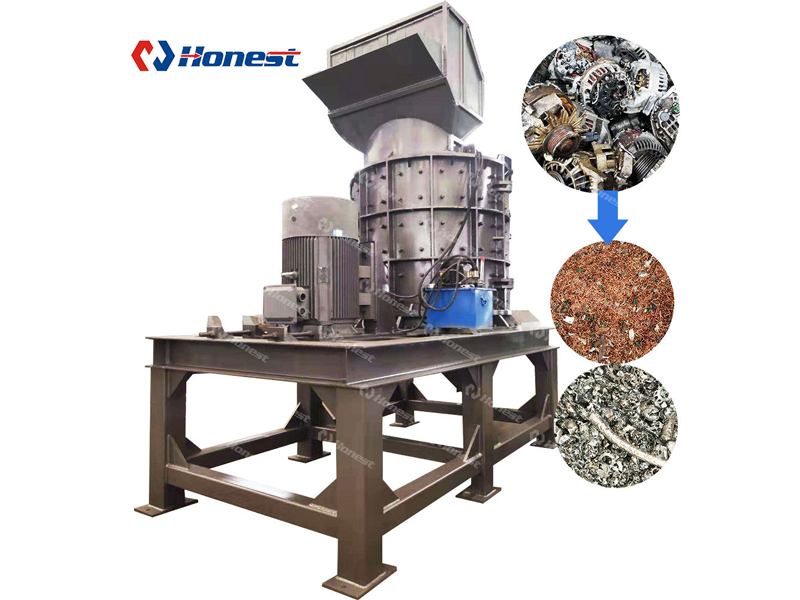
A vertical hammer polisher for iron scrap is a specialized machine used to clean and polish scrap iron and other ferrous metal materials. Unlike conventional horizontal equipment, its main working chamber is arranged vertically.
The machine uses high-speed rotating hammers or impact components to repeatedly strike and rub the scrap inside the chamber. During this process, loose rust, dirt, paint residues, oxide layers, and other surface impurities can be removed from the metal.
It is commonly used as a treatment step before further sorting, melting, or metal recovery.
2. Why Is Iron Scrap Polishing Important?
The quality of iron scrap directly affects its recycling value and downstream processing efficiency. Scrap collected from demolition sites, machinery, automobiles, appliances, and industrial production may contain various unwanted materials.
Polishing can provide several benefits:
- Remove loose rust and surface contamination.
- Reduce dirt and other attached impurities.
- Improve the appearance of recycled iron scrap.
- Prepare scrap for further sorting or melting.
- Improve the consistency of feedstock for steelmaking.
- Increase the utilization value of recovered ferrous materials.
For recyclers, better-prepared scrap can make subsequent processing more efficient.
3. How Does a Vertical Hammer Polisher Work?
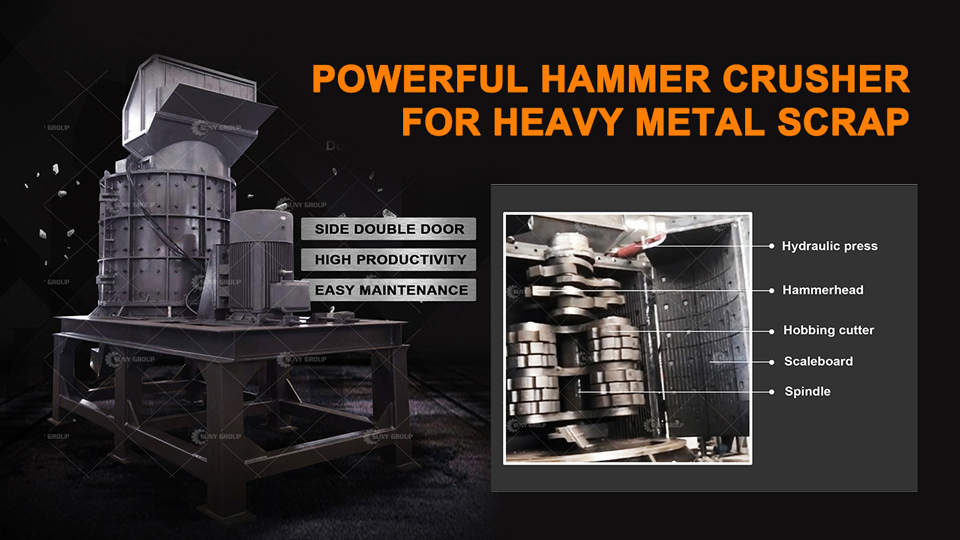
The working process is relatively straightforward. First, iron scrap is fed into the vertical polishing chamber. After the machine starts, the rotor drives the hammers at high speed.
The scrap is continuously impacted, lifted, dropped, and rubbed against other metal pieces and the internal surfaces of the chamber. This mechanical action loosens contaminants attached to the scrap surface.
The processed material is then discharged from the machine. Depending on the complete recycling system, screening, magnetic separation, or other equipment can be installed after polishing to further separate unwanted materials.
4. What Types of Iron Scrap Can It Process?
A vertical hammer polisher for iron scrap can be applied to many types of ferrous scrap, depending on its model and configuration.
Typical materials include:
- Light iron scrap
- Small steel scrap
- Scrap metal from machinery
- Automobile iron and steel components
- Appliance scrap
- Construction and demolition metal
- Metal stamping waste
- Mixed ferrous scrap
Before selecting equipment, recyclers should consider the material size, thickness, contamination level, moisture content, and required processing capacity.
5. Main Advantages and Configuration
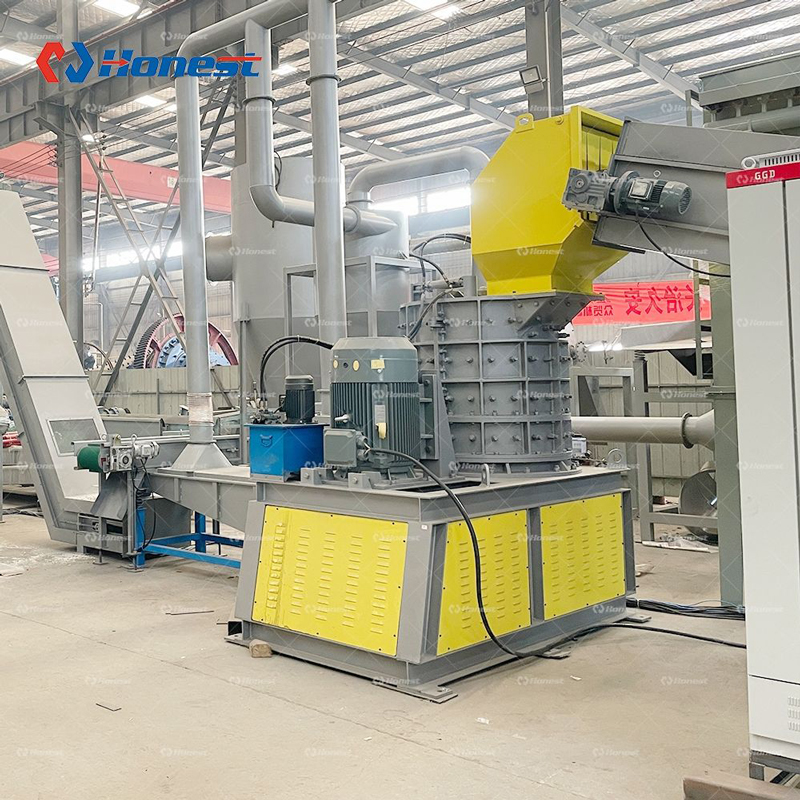
The vertical structure makes the equipment relatively compact and suitable for recycling facilities with limited floor space. Its high-speed hammer system provides strong mechanical impact, while the enclosed chamber helps contain material during processing.
Typical configurations may include:
- Vertical polishing chamber – provides the main processing space.
- High-speed rotor – drives the hammer assembly.
- Wear-resistant hammers – withstand repeated impact with metal scrap.
- Feeding system – delivers scrap into the polishing chamber.
- Discharge system – controls the processed material output.
- Dust collection system – helps manage dust generated during processing.
- Electrical control cabinet – controls machine operation and safety functions.
The exact configuration can be customized according to the customer’s raw materials and production requirements.
6. Applications and How to Choose the Right Machine
A vertical hammer polisher for iron scrap can be integrated into scrap metal recycling plants, automobile recycling facilities, steel scrap processing lines, and general metal recycling operations. It can also work together with shredders, magnetic separators, conveyors, screens, and other equipment to create a complete ferrous scrap recycling line.
When choosing a machine, customers should focus on several factors:
- Processing capacity: Match the machine with the daily scrap volume.
- Feed size: Confirm the maximum dimensions of the iron scrap.
- Material characteristics: Consider thickness, hardness, and contamination.
- Final product requirements: Determine the required cleanliness and particle size.
- Wear resistance: Check the quality and service life of hammers and liners.
- Complete-line compatibility: Make sure the polisher can connect with existing recycling equipment.
Overall, the vertical hammer polisher for iron scrap provides an effective mechanical treatment solution for improving the condition of ferrous scrap. By combining impact, friction, and controlled material movement, it can remove surface contaminants and prepare iron scrap for subsequent sorting, melting, and recycling. For customers handling limited or large volumes of iron scrap, selecting the appropriate machine capacity and configuration is essential for achieving stable processing performance and efficient resource recovery.
Prev Page: Automatic Waste Textile Fiber Cutting Machine
next Page:Plastic Crushing Plant Price