


Get the latest price? We'll respond as soon as possible(within 12 hours) Fields marked with an asterisk * are required.

Blog
Automatic Waste Textile Fiber Cutting Machine
2026-09-09 18:46:04
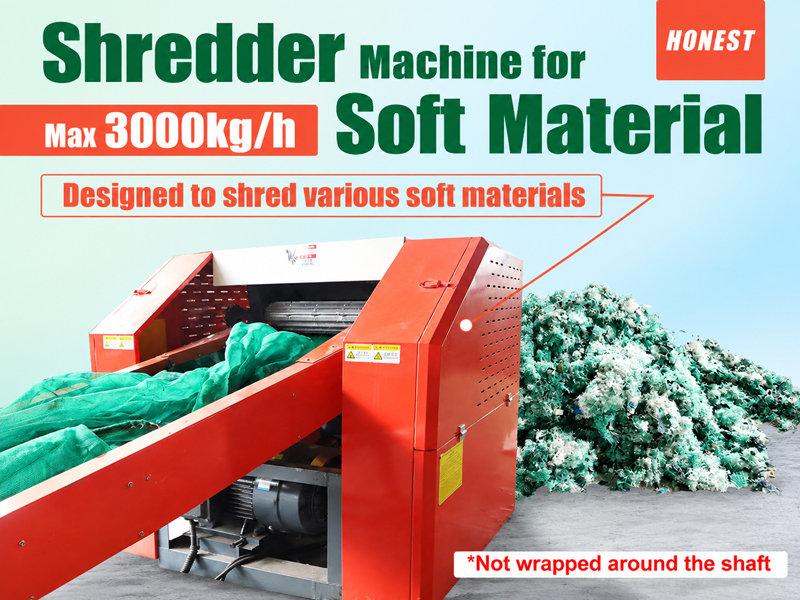
With the development of the textile, garment, home furnishing, and recycling industries, increasing amounts of waste fabric, discarded clothing, textile scraps, and fiber materials are generated every day. Instead of sending these materials directly to landfills or incineration, many businesses are looking for efficient ways to process and reuse them. Automatic Waste Textile Fiber Cutting Machine can cut and reduce various textile wastes into smaller and more manageable pieces, providing an important pretreatment step for textile recycling and fiber recovery.
What Types of Textile Fiber Can Be Processed?
Textile fiber refers to materials that can be spun or processed into yarn, fabric, or other textile products. Waste textile materials can come from both natural and synthetic sources.
Common textile waste includes:
- Cotton fiber and cotton fabric
- Wool and woolen textile waste
- Linen and flax fibers
- Silk waste
- Polyester fiber and fabric
- Nylon and polyamide textiles
- Acrylic fiber
- Viscose and rayon
- Spandex and elastic textile waste
- Blended fabrics
- Waste clothing and garments
- Textile production scraps and selvage waste
- Carpet and other suitable textile materials
Different fibers have different characteristics. For example, synthetic fabrics can have high tensile strength, while cotton and other natural fibers may be softer and easier to tear. Therefore, the machine configuration should be selected according to the actual material characteristics.
How Does an Automatic Waste Textile Fiber Cutting Machine Work?
The working principle of an Automatic Waste Textile Fiber Cutting Machine is based on controlled feeding and mechanical cutting.
The general process is:
Waste Textile Feeding → Automatic Conveying → Cutting → Size Reduction → Discharge
First, textile waste is placed into the feeding system. An automatic conveyor or feeding mechanism continuously sends the material toward the cutting chamber. Inside the chamber, rotating knives work together with fixed blades to cut the textile material into smaller pieces.
Depending on the machine design and cutting configuration, the output size can be adjusted according to the customer’s recycling requirements. After cutting, the processed textile material is discharged through the outlet and can be transferred to subsequent recycling equipment.
For larger or tougher textile waste, a stronger cutting system may be required. For lightweight fabric scraps, a smaller machine with a suitable blade configuration may provide sufficient processing performance.
What Are the Advantages of Automatic Textile Fiber Cutting Equipment?
Compared with manual cutting, automatic equipment can provide more consistent and efficient material preparation.
The main advantages include:
- Higher processing efficiency: Continuous feeding reduces manual handling.
- More uniform output: Cutting parameters can be controlled according to requirements.
- Lower labor requirements: Automatic feeding and cutting reduce repetitive work.
- Better recycling preparation: Smaller textile pieces are easier to process in downstream equipment.
- Flexible applications: Suitable for different types of textile waste when correctly configured.
- Improved workplace efficiency: Mechanical processing can replace much of the manual cutting operation.
How to Choose the Right Textile Fiber Cutting Machine?
Choosing the correct Automatic Waste Textile Fiber Cutting Machine requires more than simply comparing machine prices. Customers should first understand their material and production requirements.
1. Identify the Raw Material
Determine whether the input consists mainly of cotton, polyester, nylon, wool, clothing, carpets, fabric rolls, or mixed textile waste. Material thickness, moisture, tensile strength, and contamination can affect machine selection.
2. Determine Required Capacity
Estimate the amount of waste generated per hour or per day. Small textile workshops may need a compact machine, while large textile recycling plants should consider higher-capacity equipment.
3. Check the Required Output Size
Different recycling processes require different particle or strip sizes. Customers should communicate their desired output size with the manufacturer before selecting the cutting system and blade configuration.
4. Consider the Automation Level
A semi-automatic machine may be suitable for small operations with lower throughput. A fully automatic system is more appropriate for continuous industrial production where reducing labor and maintaining stable feeding are important.
5. Consider Machine Power and Blade Design
Thick fabrics, ropes, carpets, and high-strength synthetic fibers may require greater cutting force and a more robust blade system. Soft textile scraps may require a different configuration.
How Should Customers Select the Machine Model?
A practical selection process can be divided into five steps:
- Send representative textile samples to the manufacturer.
- Confirm the material type, thickness, and moisture level.
- Determine the required capacity in kg/h or tons/day.
- Specify the desired output size.
- Conduct a material test before finalizing the machine model.
This approach is more reliable than selecting a machine based only on its name or rated power. A suitable model should match the customer’s actual material, capacity, output requirements, and downstream recycling process.
What Can the Processed Textile Material Be Used For?
After cutting, waste textile fibers and fabric pieces can be used as feedstock for different recycling applications.
Depending on the material and subsequent processing technology, the output can be used for:
- Recycled fiber production
- Nonwoven fabric manufacturing
- Carpet and mat production
- Filling materials
- Acoustic and thermal insulation
- Industrial felt
- Wiping and cleaning materials
- Automotive interior materials
- Composite products
- Other textile recycling applications
For some materials, cutting is only the first step. The processed textile may subsequently require shredding, fiber opening, sorting, cleaning, or other treatment before it can be converted into a finished recycled product.
Automatic Waste Textile Fiber Cutting Machine provides an efficient solution for reducing waste textiles before further recycling. It can process cotton, polyester, nylon, wool, blended fabrics, discarded clothing, textile scraps, and other suitable materials when the equipment is correctly configured. By evaluating raw material characteristics, processing capacity, required output size, automation level, blade configuration, and downstream applications, customers can select the most suitable machine model. Proper equipment selection not only improves cutting efficiency but also creates better-quality feedstock for subsequent textile fiber recycling and reuse.