


Get the latest price? We'll respond as soon as possible(within 12 hours) Fields marked with an asterisk * are required.

Blog
Hopper Scrap Shredder Machine
2026-08-31 19:12:16
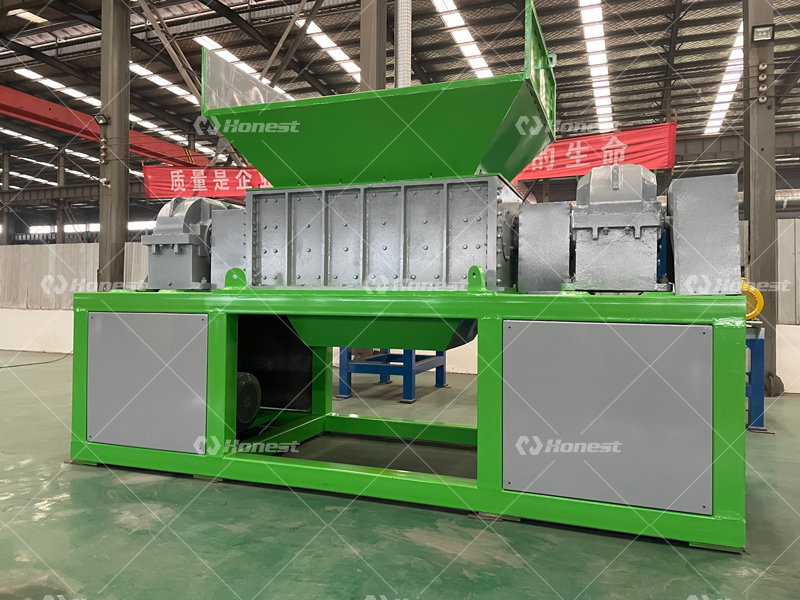
Hopper Scrap Shredder Machine is an industrial shredding machine designed to reduce large volumes of scrap materials into smaller, more manageable pieces. The hopper is the feeding chamber located above the shredding mechanism. It allows operators or feeding equipment to continuously load scrap into the machine for efficient processing.
Depending on the material and application, a hopper scrap shredder can process metal scrap, plastic waste, rubber, wood, electronic waste, household waste and other difficult-to-handle materials. By reducing material size, the machine makes subsequent sorting, transportation, recycling and further processing easier.
1. What Is a Hopper Scrap Shredder Machine?
A hopper scrap shredder machine combines a large-capacity feeding hopper with a heavy-duty shredding system. Scrap enters through the hopper and is pulled into the cutting chamber by rotating cutters.
The basic working process is:
Scrap Feeding → Hopper → Shredding Chamber → Cutting → Size Reduction → Discharge
The hopper is particularly important when processing bulky or irregular scrap because it provides sufficient feeding space and helps prevent material from falling outside the shredding chamber.
For continuous industrial applications, the hopper can also be connected with a conveyor, grab loader or other automatic feeding system.
2. What Are the Advantages of a Hopper Scrap Shredder?
A properly designed hopper scrap shredder machine offers several important advantages.
1. Large Feeding Capacity
The large hopper can accommodate bulky and irregular materials, reducing the need for excessive manual preparation before shredding.
2. Continuous Operation
The machine can work continuously with conveyors or automatic feeding systems, making it suitable for medium- and large-scale recycling plants.
3. High Shredding Efficiency
Heavy-duty cutters generate strong shearing and tearing forces, allowing the machine to process difficult materials efficiently.
4. Wide Material Compatibility
Depending on the cutter configuration and drive system, one machine can be adapted to different types of scrap materials.
5. Adjustable Output Size
Some shredder systems can control the final particle size through cutter configuration and a screen. This is useful when the shredded material needs to enter a downstream sorting or recycling process.
6. Easy Integration
A hopper scrap shredder can be integrated with conveyors, magnetic separators, screening machines, air separators and other recycling equipment to create a complete processing line.
3. Main Types of Hopper Scrap Shredder Machines
Different materials require different shredding technologies. Common types include:
Double Shaft Scrap Shredder
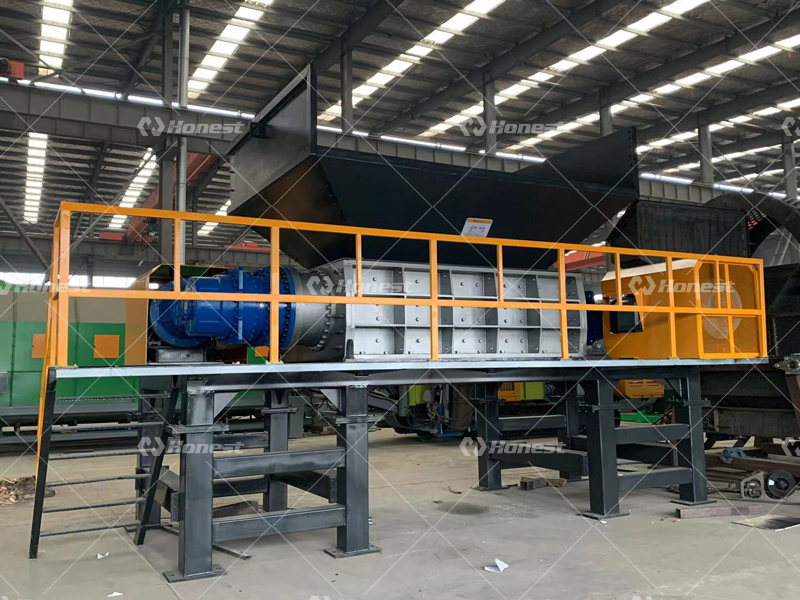
A double shaft shredder uses two counter-rotating shafts equipped with cutters. The material is pulled between the shafts and processed through shearing and tearing.
It is suitable for:
- Metal scrap
- Plastic waste
- Tires
- Household waste
- Industrial waste
- Electronic waste
It is a good choice for bulky materials that require strong feeding and shredding forces.
Single Shaft Scrap Shredder
A single shaft shredder generally uses a rotating rotor together with a fixed cutting system. A hydraulic pusher can continuously push material toward the rotor.
It is suitable for materials that require controlled size reduction, such as plastics, rubber, cables, wood and certain industrial scraps.
Heavy-Duty Metal Scrap Shredder
For thicker and heavier metal scrap, a specially reinforced shredder with a high-torque drive, robust frame and wear-resistant cutters is required.
Typical applications include:
- Aluminum scrap
- Light metal scrap
- Metal containers
- Industrial metal waste
- Certain automotive scrap
The machine must be selected according to the thickness, dimensions and hardness of the metal.
4. How to Choose a Hopper Scrap Shredder According to Material?
Choosing a shredder only according to its motor power is not recommended. The material characteristics are more important.
Material Type
First identify whether the feedstock is plastic, rubber, metal, wood, electronic waste or mixed scrap. Different materials require different cutter designs and machine structures.
Material Size
Large and bulky materials require a sufficiently large hopper and feeding opening. If the material is too large, a pre-cutting or pre-crushing process may be necessary.
Material Hardness
Hard and abrasive materials require stronger cutters and wear-resistant components. Soft materials can normally be processed with less cutting force.
Required Capacity
Calculate the required throughput in tons per hour (t/h). A machine processing 1–2 t/h has very different requirements from a plant processing 10–20 t/h.
Desired Output Size
Determine the required particle size before selecting the machine. If the shredded material must meet a specific size requirement, the rotor, cutter arrangement and screening system should be designed accordingly.
Moisture and Contamination
Wet, sticky or contaminated materials may require a different feeding and shredding configuration. For mixed scrap, downstream separation equipment may also be necessary.
5. How to Build a Scrap Shredding Line?
For a complete recycling project, the hopper scrap shredder is normally only one part of the system.
A typical configuration can include:
Feeding Hopper → Conveyor → Scrap Shredder → Magnetic Separator → Screening Machine → Air Separation → Final Collection
For metal recycling, a magnetic separator can remove ferrous metals. For mixed materials, additional sorting equipment can separate plastic, aluminum, copper and other fractions.
The exact configuration should be determined according to the feedstock, capacity, required output and final application.
Hopper Scrap Shredder Machine is an important size-reduction solution for modern recycling and waste-processing applications. Its large feeding hopper, strong shredding capability, continuous operation and flexible configuration make it suitable for many industrial scrap materials.
The best machine is not necessarily the largest or most powerful model. Buyers should consider material type, hardness, dimensions, moisture, throughput, required output size and downstream processing requirements before making a selection.
For recycling companies, choosing the correct hopper scrap shredder can improve processing efficiency, reduce labor requirements and create a more reliable recycling system.