


Get the latest price? We'll respond as soon as possible(within 12 hours) Fields marked with an asterisk * are required.

Blog
Plastic Crushing Plant Price
2026-10-09 15:39:19
With the increasing amount of plastic waste generated by packaging, manufacturing, and consumer products, plastic recycling has become an important part of modern waste management. plastic crushing plant is commonly used to reduce large plastic materials into smaller pieces for further washing, sorting, and recycling. For companies planning to invest in a recycling project, understanding the plastic crushing plant price, suitable equipment, plant configuration, and processing capacity is essential.
What Types of Plastic Can Be Crushed?
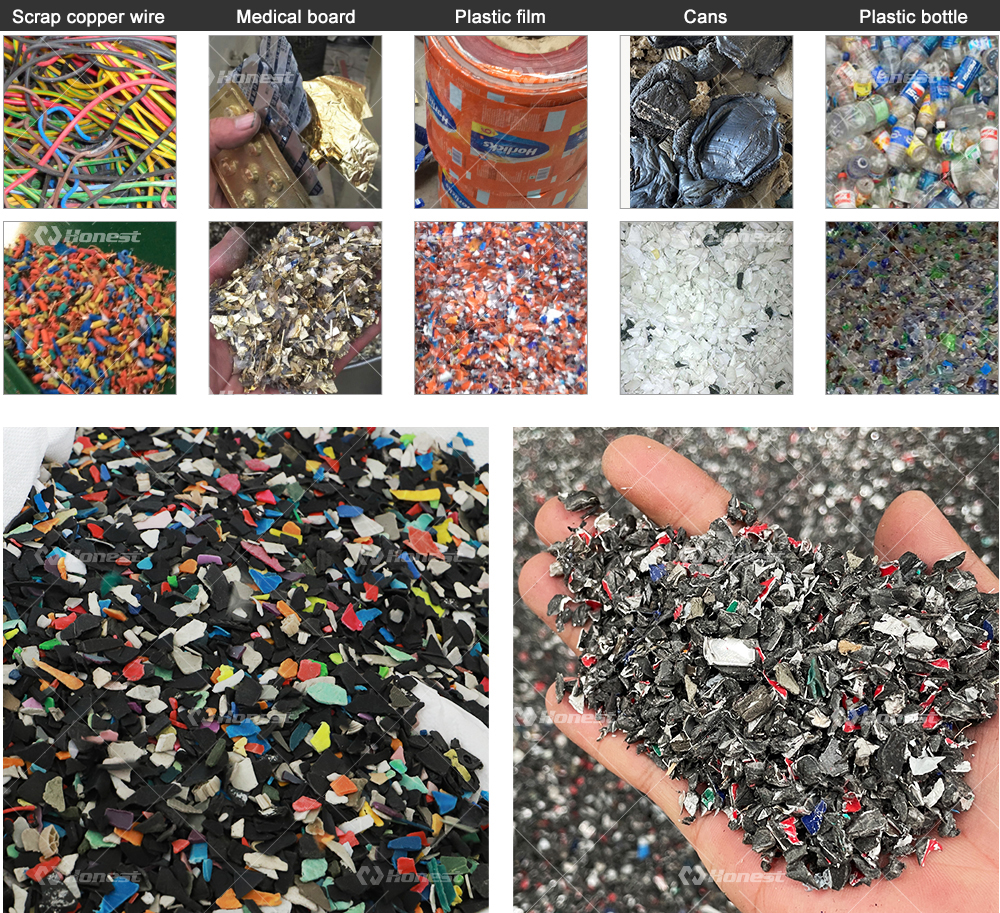
Different plastic materials have different physical properties, so the crushing equipment should be selected according to the material type and final product size. Common plastics processed in a plastic crushing plant include:
- PP (Polypropylene): Commonly found in plastic containers, woven bags, automotive components, and household products.
- PE (Polyethylene): Includes HDPE and LDPE, widely used for plastic bottles, pipes, films, and packaging.
- PET (Polyethylene Terephthalate): Mainly used for beverage bottles and food packaging.
- PVC (Polyvinyl Chloride): Used in pipes, profiles, cables, and construction materials.
- ABS: Frequently found in electronic housings, automotive parts, and consumer products.
- Plastic films and bags: These flexible materials require appropriate feeding and cutting designs to prevent wrapping around the rotor.
Because these materials vary in hardness, thickness, and flexibility, the crusher configuration should be customized according to the actual feedstock.
Why Is a Knife Crusher Suitable for Plastic?
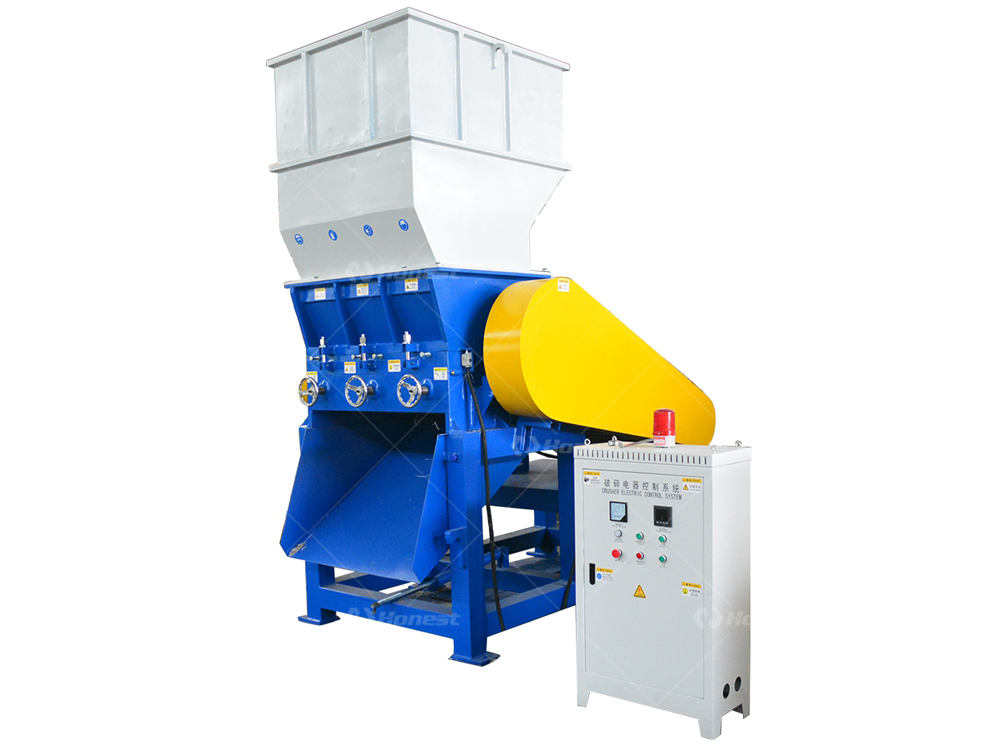
A plastic knife crusher, also called a plastic granulator or plastic shredder crusher depending on the design, uses rotating knives and fixed knives to cut plastic into smaller pieces. Compared with simple impact crushing, cutting is particularly suitable for many plastic materials because it provides controlled size reduction.
The main advantages include:
- Efficient cutting: Sharp blades can continuously cut plastic into smaller pieces.
- Adjustable output size: A screen can control the final particle size.
- Lower material damage: Cutting is suitable for many thermoplastics that can deform rather than break under impact.
- Continuous operation: Automatic feeding allows stable processing.
- Wide applications: It can process bottles, containers, pipes, sheets, injection-molded plastics, and other plastic waste.
For thin films, bulky plastics, or heavily contaminated materials, however, additional shredding, pre-treatment, or specialized equipment may be required.
How to Build a Plastic Crushing Plant?
A complete plastic crushing plant does not necessarily need to be complicated. A typical process can be designed according to the material and required output:
Plastic Waste → Feeding → Metal Removal → Crushing → Screening → Washing → Dewatering/Drying → Collection
A basic crushing line may include:
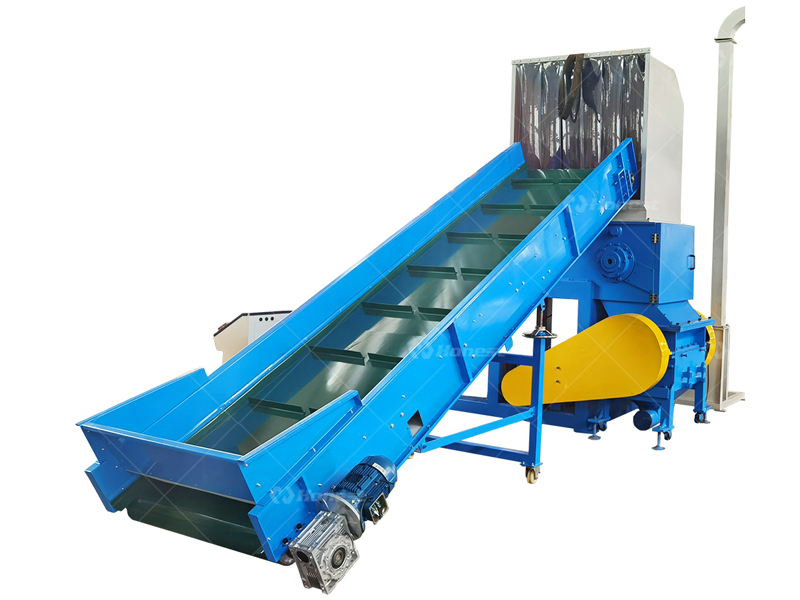
- Feeding conveyor: Delivers plastic waste continuously to the crusher.
- Magnetic separator: Removes ferrous metal contaminants when necessary.
- Plastic knife crusher: Reduces plastic into the required size.
- Vibrating screen or discharge system: Controls and transfers the crushed material.
- Washing equipment: Removes dirt, labels, oil, and other contaminants when clean plastic flakes are required.
- Dewatering and drying equipment: Reduces moisture before storage or further processing.
For a simple project, only a plastic crusher machine and feeding system may be required. For a complete plastic recycling project, washing, drying, sorting, and pelletizing equipment can be added according to the final product requirements.
Advantages of a Plastic Crushing Plant
Investing in a plastic crushing plant can provide several benefits for recycling businesses:
- Reduced plastic volume: Crushing makes plastic waste easier to transport and store.
- Improved recycling efficiency: Smaller plastic flakes are easier to wash and process.
- Higher material value: Properly processed plastic flakes can become valuable recycling feedstock.
- Flexible configuration: The plant can be designed for different plastic types and capacities.
- Labor reduction: Automated feeding and conveying can reduce manual handling.
- Expandable production: Washing, drying, sorting, and pelletizing systems can be added later.
How Much Does a Plastic Crushing Plant Cost?
The plastic crushing plant price depends on several factors rather than having one fixed price. Important factors include:
- Processing capacity: A 500 kg/h plant generally costs less than a 2,000 kg/h or 5,000 kg/h system.
- Plastic type: Film, bottles, rigid plastic, pipes, and mixed plastics require different configurations.
- Equipment configuration: A crusher-only system has a lower investment than a complete washing and recycling line.
- Automation level: Automatic feeding, sorting, and conveying increase the initial investment but can reduce labor costs.
- Final product requirements: Higher-quality recycled flakes require additional washing, drying, and sorting equipment.
- Customization: Special materials and production requirements may require customized machines.
Therefore, buyers should request a complete quotation based on plastic type, capacity, feed size, required output size, and final product requirements instead of comparing machine prices alone.
A well-designed plastic crushing plant can efficiently process PP, PE, PET, PVC, ABS, and other plastic waste into smaller recyclable pieces. Knife-type crushing equipment is widely suitable because it provides efficient cutting, controllable particle size, and continuous processing. When evaluating the plastic crushing plant price, buyers should consider the complete plant configuration, capacity, automation, material characteristics, and future recycling requirements. Choosing the right equipment configuration can improve production efficiency while creating greater value from waste plastic.