


Get the latest price? We'll respond as soon as possible(within 12 hours) Fields marked with an asterisk * are required.

Blog
Shredding Machine for Municipal and Hospital Waste
2026-08-28 18:17:03
The increasing amount of municipal solid waste and healthcare waste has created a growing demand for efficient waste treatment equipment. A shredding machine for municipal and hospital waste is designed to reduce the size of various waste materials, making them easier to transport, sterilize, sort, recycle, or dispose of. Depending on the waste type, a complete treatment system may combine shredding with screening, magnetic separation, sterilization, or other downstream processes.
For municipal waste treatment plants, recycling companies, hospitals, and specialized waste management facilities, selecting the right shredder is essential for achieving stable operation and efficient waste reduction.
1. What Is a Shredding Machine for Municipal and Hospital Waste?
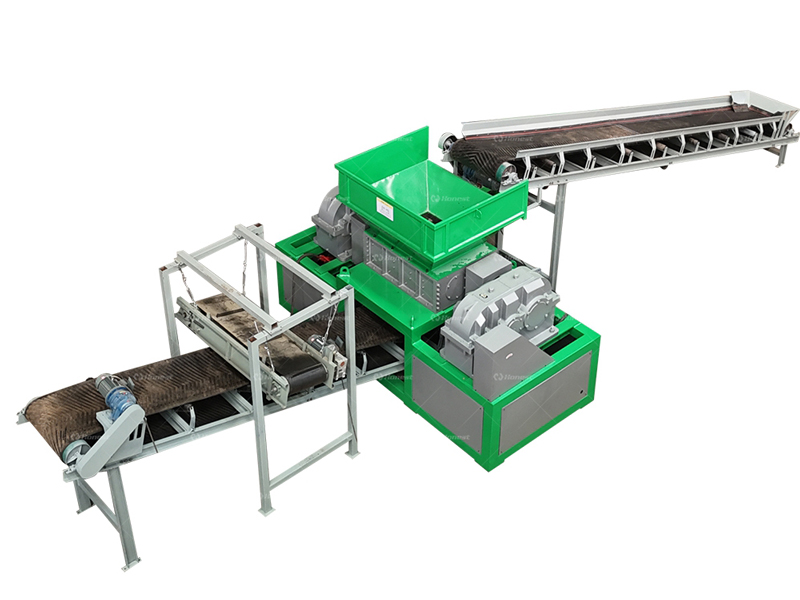
A shredding machine for municipal and hospital waste is heavy-duty equipment that uses rotating cutters or shafts to tear, shear, and break waste into smaller pieces.
Unlike conventional crushers, waste shredders are generally designed to handle materials with different shapes, moisture contents, and toughness.
A typical machine may include:
- Feeding hopper
- Single or double shafts
- Shredding knives or cutters
- Main drive motor
- Gearbox
- Hydraulic or electrical drive system
- Shredding chamber
- Discharge conveyor
- Electrical control cabinet
- Safety and overload protection system
The machine can be customized according to waste composition, required capacity, and target particle size.
2. What Types of Waste Can Be Processed?
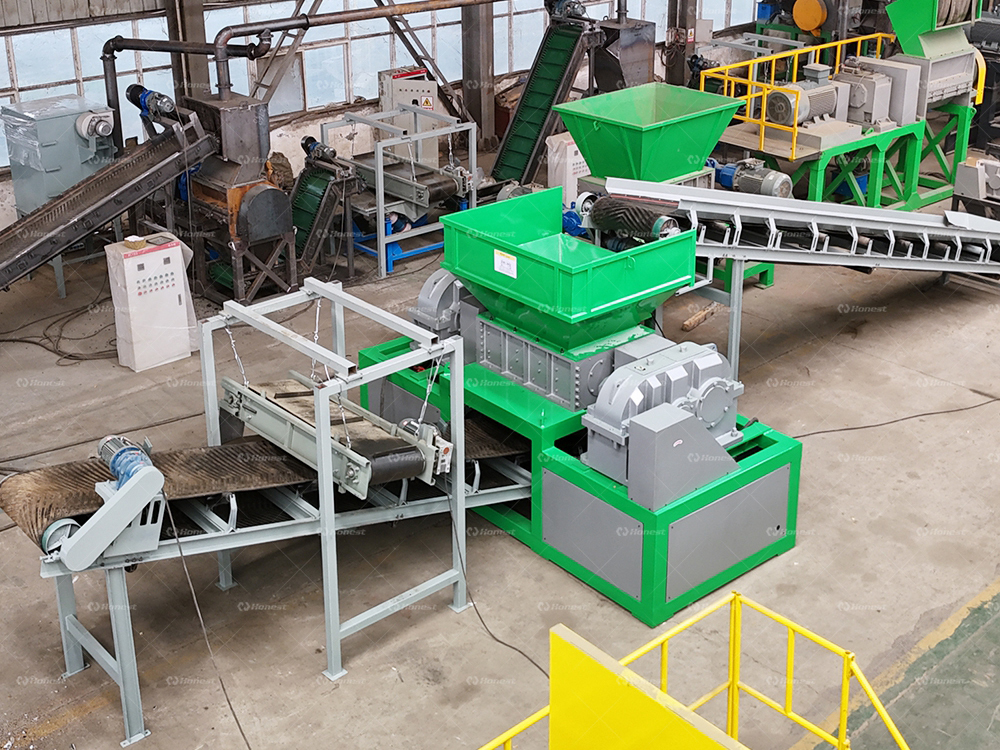
Municipal waste is a complex mixture that may contain household waste, packaging, textiles, plastics, paper, wood, and other discarded materials.
A suitable industrial shredder can process:
- Municipal solid waste (MSW)
- Household waste
- Waste plastics
- Waste paper and cardboard
- Textiles and fabrics
- Wood waste
- Packaging waste
- Selected bulky waste
Hospital waste is more complicated because some materials may be infectious or hazardous. Depending on local regulations, infectious healthcare waste generally needs to be segregated and appropriately treated or sterilized before mechanical shredding. Sharps and hazardous pharmaceutical or chemical waste may also require separate treatment rather than being fed directly into a conventional shredder.
3. How Does the Waste Shredding Machine Work?
The working principle mainly relies on shearing, tearing, squeezing, and cutting.
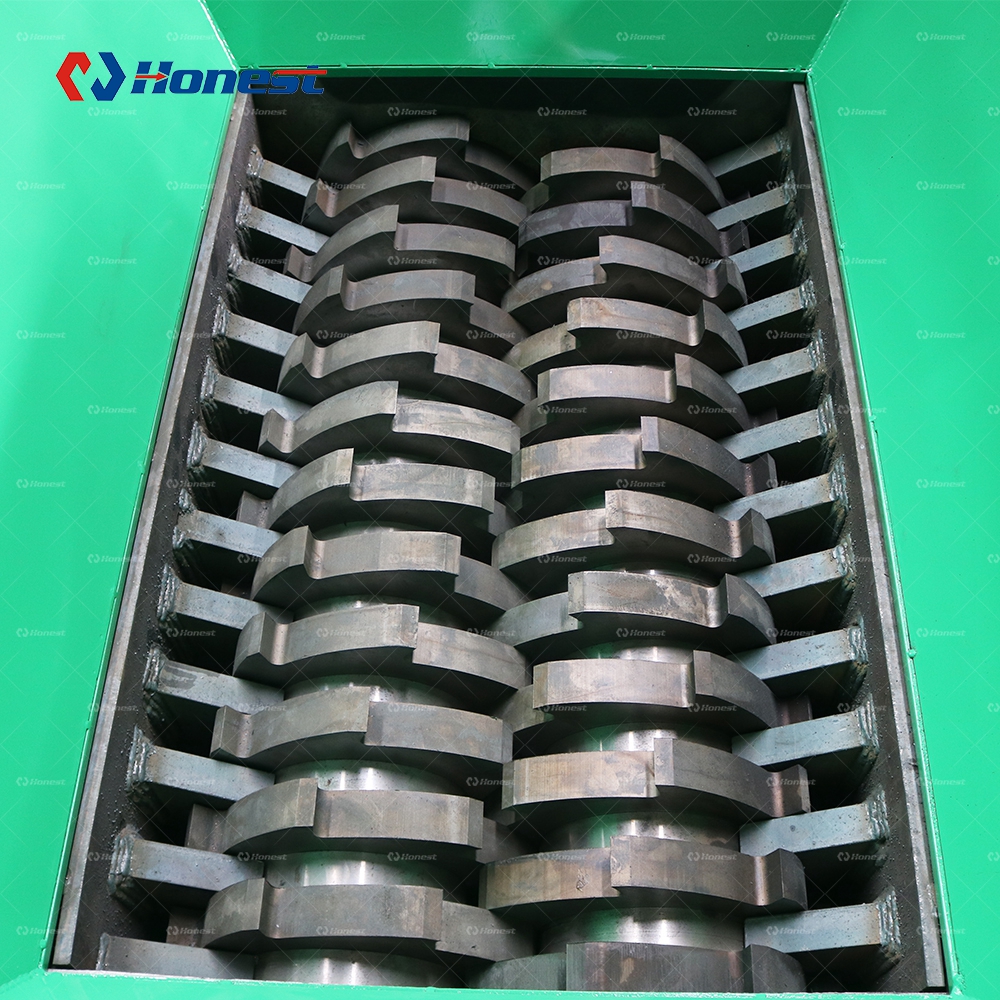
First, the waste enters the hopper. The rotating shafts equipped with specially designed cutters grab the material and pull it into the shredding chamber. The cutters continuously tear and shear the waste against fixed cutting components.
As the material passes repeatedly through the cutting area, its size gradually decreases. The final particle size can be influenced by cutter configuration, shaft speed, cutter spacing, and optional screens.
The basic process can be summarized as:
Waste Feeding → Primary Shredding → Size Reduction → Discharge → Further Treatment or Sorting
For hospital applications, shredding may be integrated into a controlled treatment process after appropriate sterilization or disinfection.
4. Key Advantages of a Municipal and Hospital Waste Shredder
A professional shredding machine for municipal and hospital waste offers several advantages:
- High waste reduction efficiency: Bulky waste can be converted into smaller particles.
- Strong adaptability: Suitable configurations can handle mixed and irregular materials.
- High torque: Low-speed, high-torque designs are effective for difficult waste.
- Reduced transportation volume: Smaller waste particles require less storage space.
- Improved downstream processing: Uniformly sized material is easier to sort, sterilize, recycle, or use as fuel where permitted.
- Overload protection: Hydraulic or intelligent control systems can help protect the machine from unexpected hard materials.
- Customizable output size: Cutter and screen configurations can be selected according to application requirements.
5. What Materials Are Produced After Shredding?
The output depends on the incoming waste and the treatment process.
For municipal solid waste, shredding can produce a relatively uniform mixed waste fraction that may subsequently undergo screening, magnetic separation, air classification, recycling, or refuse-derived fuel (RDF) preparation where appropriate.
Potential recoverable materials include:
- Ferrous metals
- Non-ferrous metals
- Plastics
- Paper
- Cardboard
- Wood
- Textiles
For hospital waste, the objective is often safe treatment and volume reduction rather than direct material recovery. After approved sterilization and treatment, the resulting material may be suitable for further disposal or processing according to local regulations.
6. How to Choose the Right Shredding Machine?
Before purchasing a shredding machine for municipal and hospital waste, buyers should evaluate:
- Waste composition – Determine exactly what materials will enter the machine.
- Processing capacity – Select the required tons per hour or tons per day.
- Feed size – Check the maximum dimensions of incoming waste.
- Output size – Define the required particle size for subsequent treatment.
- Moisture content – Wet and sticky waste may require a different cutter and chamber design.
- Safety requirements – Hospital waste requires strict segregation, containment, and treatment procedures.
- Wear resistance – Cutter material and chamber liners are important for continuous operation.
- Automation – PLC control and automatic overload protection can improve operational stability.
- Dust and odor control – Appropriate collection and treatment systems may be required.
- Manufacturer experience – Choose a supplier with relevant municipal or healthcare waste projects and reliable after-sales support.
Shredding machine for municipal and hospital waste is an important component of modern waste management systems. It can reduce the volume and size of municipal waste and prepare recyclable materials for subsequent sorting and processing. For healthcare waste, however, the shredder should be integrated into a properly designed treatment system, with infectious and hazardous materials handled according to applicable regulations.
The best equipment should be selected according to waste type, capacity, moisture, feed size, required output size, safety requirements, and downstream treatment technology. With the right configuration, an industrial waste shredder can improve waste handling efficiency, reduce transportation volume, and support more effective municipal and healthcare waste management.