


Get the latest price? We'll respond as soon as possible(within 12 hours) Fields marked with an asterisk * are required.

Blog
Soft Material Shredder
2026-04-21 12:30:09
In the recycling and waste management industry, a soft material shredder plays a vital role in processing flexible and lightweight materials. These machines are specifically designed to handle materials that are difficult to cut using traditional crushers.
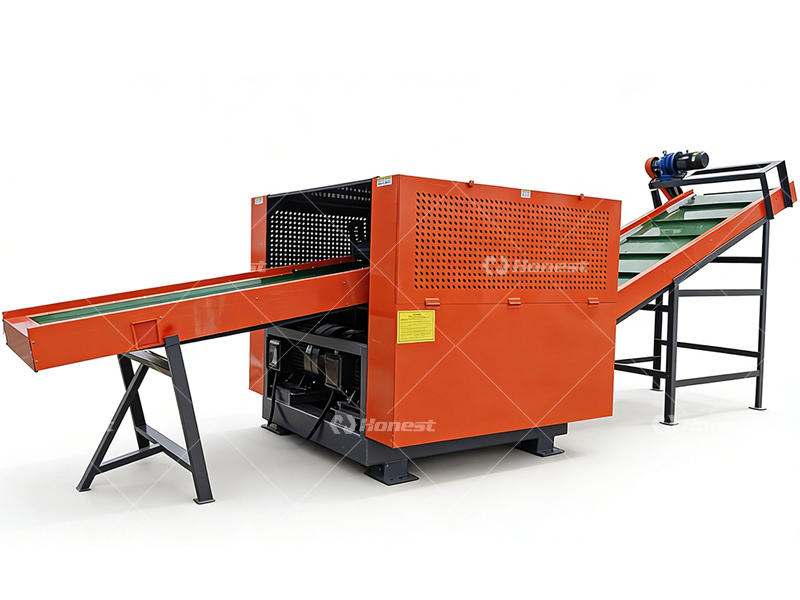
1. What Are Soft Materials?
Soft materials refer to flexible, elastic, or low-density materials that are not rigid or brittle. These materials are widely found in industrial and municipal waste streams.
Common Types of Soft Materials:
- Plastic films (PE, PP, PVC films)
- Textiles and fabrics (cotton, polyester, nylon)
- Rubber materials (tires, rubber sheets, silicone)
- Foam products (EVA, PU foam, sponge)
- Paper and cardboard (corrugated board, tissue)
- Leather and synthetic leather
These materials often have high toughness and entanglement properties, making them challenging to process without specialized shredding equipment.
2. How to Choose a Soft Material Shredder
Selecting the right shredder is crucial for efficiency and long-term performance.
Key Selection Factors:
- Material Type and Properties
- Consider hardness, elasticity, and moisture content
- Films and textiles require anti-wrapping designs
- Capacity Requirements
- Choose machine size based on hourly processing needs
- Output Size
- Determine required particle size for downstream processing
- Blade Design
- Use hook-type or claw-type blades for better tearing efficiency
- Drive System
- Hydraulic or electric drives depending on load intensity
- Anti-Clogging Features
- Essential for fibrous or sticky materials
- Automation Level
- PLC control systems improve safety and operational efficiency
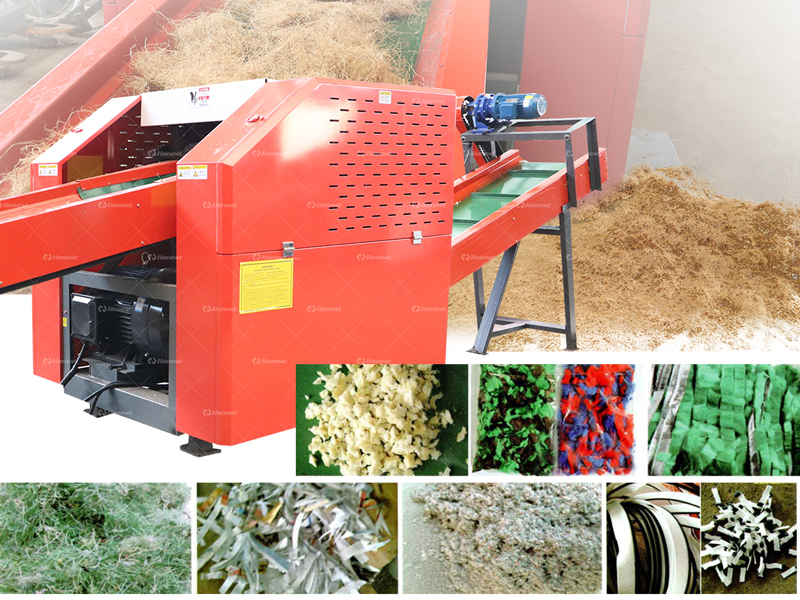
3. Working Principle of a Soft Material Shredder
The working mechanism of a soft material shredder is based on low-speed, high-torque shearing and tearing.
Step-by-Step Process:
- Feeding
Soft materials are fed into the shredding chamber via conveyor or manually - Cutting and Tearing
Rotating shafts equipped with sharp blades grip and tear the material - Shearing Action
The interaction between rotating blades and fixed cutters ensures continuous size reduction - Screen Control (Optional)
A screen may be used to control output size - Discharge
Shredded material exits the machine for further processing
This design minimizes dust, reduces noise, and ensures stable operation even with flexible materials.
4. Applications of Shredded Soft Materials
After shredding, soft materials can be reused in various industries.
Major Applications:
- Plastic Recycling
Shredded films are pelletized into recycled plastic granules - Textile Recycling
Used for insulation materials, wiping cloths, or fiber regeneration - Rubber Reuse
Processed into rubber powder for flooring, mats, or asphalt additives - Waste-to-Energy (RDF)
Soft waste can be converted into refuse-derived fuel - Packaging Fillers
Foam and paper can be reused as cushioning materials
5. Importance and Benefits of Soft Material Shredding
Environmental and Economic Significance:
- Waste Volume Reduction
Shredding significantly reduces storage and transportation costs - Resource Recovery
Enables reuse of valuable materials - Energy Saving
Supports alternative fuel production - Sustainability
Reduces landfill dependency and environmental pollution - Improved Efficiency
Prepares materials for downstream recycling processes
Soft material shredder is an essential machine for efficiently processing flexible waste materials. By understanding the types of soft materials, selecting the right equipment, and utilizing its effective working principle, businesses can achieve higher recycling efficiency and sustainability. The shredded output not only reduces waste but also creates valuable resources for various industries, making it a key component in modern recycling systems.