


Get the latest price? We'll respond as soon as possible(within 12 hours) Fields marked with an asterisk * are required.

Blog
Fiberglass Recycling Machine
2026-04-01 18:17:54
With the increasing focus on sustainability, the demand for fiberglass recycling machine solutions is growing rapidly. Fiberglass is widely used across industries, but its disposal has become a challenge. Recycling fiberglass not only reduces environmental impact but also creates new economic opportunities. This article explains what fiberglass is, its common uses, recycling machines, cutting principles, and the applications of recycled fiberglass.
1. What Is Fiberglass?
Fiberglass, also known as glass fiber reinforced plastic (GFRP), is a composite material made of fine glass fibers embedded in resin. It is known for its:
- Lightweight structure
- High strength and durability
- Corrosion resistance
- Excellent insulation properties
These characteristics make fiberglass a popular material in many industries.
2. Common Uses of Fiberglass
Fiberglass is widely applied in various sectors, including:
- Construction Industry
Used in roofing sheets, wall panels, insulation materials, and pipes. - Automotive and Transportation
Applied in car bodies, boat hulls, and aircraft components. - Wind Energy
Used in wind turbine blades due to its strength and flexibility. - Electronics and Electrical Industry
Used as insulation materials and circuit board components. - Consumer Goods
Found in bathtubs, storage tanks, and sports equipment.
Due to its durability, fiberglass waste is difficult to degrade, making recycling essential.
3. What Machine Is Used for Fiberglass Recycling?
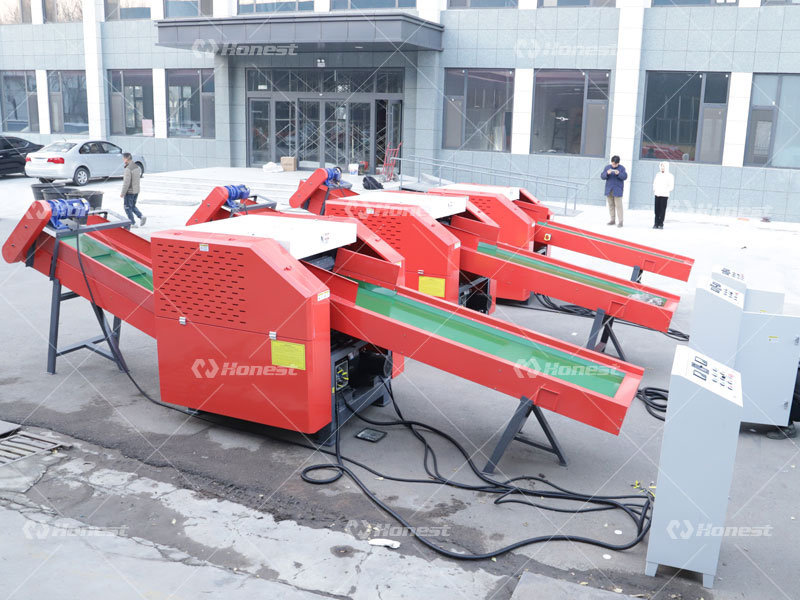
A fiberglass recycling machine is designed to process and reduce fiberglass waste into reusable materials. The main equipment includes:
- Fiberglass cutting machine (shredder)
- Crushing machine
- Dust collection system
- Screening system
Among these, the cutting machine plays a key role in the recycling process.
4. Working Principle of the Fiberglass Cutting Machine
The fiberglass cutting machine operates through a mechanical shredding process:
- Feeding
Fiberglass waste is fed into the machine through a conveyor or manual input. - Cutting and Shearing
High-speed rotating blades and fixed knives work together to cut and shear the material into smaller pieces. - Crushing
The material is further reduced into uniform particles. - Screening
A screen controls the output size, ensuring consistent particle dimensions. - Dust Collection
A dust removal system ensures a clean and safe working environment.
This process is efficient, continuous, and suitable for large-scale industrial recycling.
5. Applications of Recycled Fiberglass
After recycling, fiberglass can be reused in multiple ways:
- Reinforcement Material
Used in construction materials like cement and asphalt to improve strength. - Plastic Composites
Added to recycled plastics to enhance durability. - Industrial Fillers
Used as fillers in manufacturing various products. - Energy Recovery (in some cases)
Processed for alternative fuel use in industrial systems. - New Fiberglass Products
Reintroduced into production cycles with modified properties.
6. Advantages of Fiberglass Recycling Machines
Using a fiberglass recycling machine offers several benefits:
- Environmental Protection
Reduces landfill waste and pollution. - Cost Efficiency
Converts waste into valuable reusable materials. - High Processing Efficiency
Handles large volumes of fiberglass waste. - Versatility
Suitable for different types of fiberglass materials.
The fiberglass recycling machine is an essential solution for managing fiberglass waste in a sustainable and profitable way. By understanding what fiberglass is, its applications, and the working principle of recycling equipment, businesses can make informed decisions. Recycling not only reduces environmental impact but also creates valuable materials for reuse, supporting a circular economy and long-term industrial growth.