


Get the latest price? We'll respond as soon as possible(within 12 hours) Fields marked with an asterisk * are required.

News
Textile Spiral Shredder
2026-02-09 15:39:50
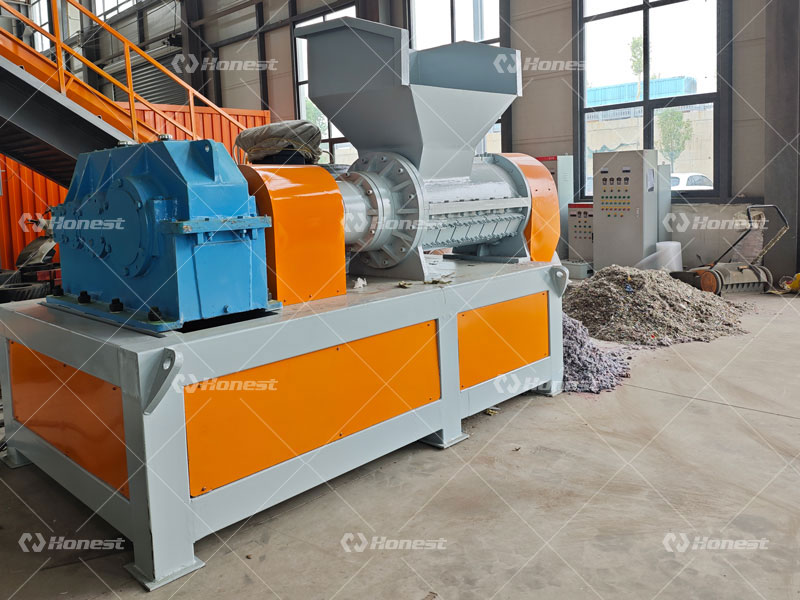
Textile spiral shredder is a specialized shredding machine designed for efficient size reduction of textile waste. With the rapid growth of the textile, garment, and non-woven industries, large volumes of fabric waste are generated every year. Compared with traditional blade shredders, spiral shredders offer smoother cutting, reduced fiber damage, and higher stability, making them especially suitable for textile recycling.
1. Main Types of Textiles Processed by Textile Spiral Shredders
Textile waste varies widely in composition, thickness, and strength. A textile spiral shredder can handle most common textile materials, including:
-
Natural fibers: Cotton, wool, linen, silk
-
Synthetic fibers: Polyester, nylon, acrylic, polypropylene (PP)
-
Blended textiles: Cotton-polyester, wool-acrylic blends
-
Industrial textiles: Non-woven fabrics, felt, geotextiles
-
Post-consumer textiles: Used clothing, jeans, uniforms, home textiles
-
Production waste: Fabric scraps, rolls, off-cuts, edge trim
These materials are often soft, flexible, and prone to winding, which makes equipment selection critical.
2. Why a Spiral Shredder Is Suitable for Textile Materials
A spiral shredder is widely considered ideal for textile processing due to its unique cutting mechanism. The main reasons include:
-
Anti-Winding Design: Spiral cutters continuously pull and cut textiles, reducing wrapping around shafts
-
Uniform Size Reduction: Produces consistent fiber length for downstream processes
-
Low Heat Generation: Gentle cutting minimizes fiber melting or burning
-
Stable Feeding: Soft textiles are smoothly drawn into the cutting zone
-
High Throughput: Suitable for large-volume textile waste processing
Because of these advantages, a textile spiral shredder is commonly used before fiber opening, re-carding, or insulation material production.
3. Structure Features of a Textile Spiral Shredder
The structure of a textile spiral shredder is optimized for flexible and lightweight materials. Key structural components include:
-
Spiral Cutting Shaft: Helical blades arranged along the shaft for continuous cutting
-
Counter Knife or Fixed Blade: Works with spiral cutters to shear textiles efficiently
-
Heavy-Duty Frame: Ensures vibration-free operation during shredding
-
Drive System: Gear motor or hydraulic drive providing steady torque
-
Discharge System: Conveyor or gravity discharge for shredded textile output
The spiral blade arrangement reduces sudden impact, improving blade life and operational stability.
4. Working Principle of a Textile Spiral Shredder
The working principle of a textile spiral shredder is based on progressive shearing:
-
Textile material is fed into the shredding chamber
-
The spiral shaft rotates at low speed and high torque
-
Helical cutters grip, pull, and shear the textile against the fixed blade
-
Material is gradually reduced to the required size and discharged
This continuous cutting action avoids tearing and knotting, which is common in conventional shredders when handling textiles.
5. How to Choose the Right Textile Spiral Shredder
When selecting a textile spiral shredder, the following factors should be evaluated:
-
Textile Type and Thickness: Determines blade hardness and shaft design
-
Required Output Size: Fiber length needed for recycling or reuse
-
Processing Capacity: Hourly throughput requirements
-
Automation Level: Manual feeding or conveyor-based system
-
Maintenance Cost: Blade replacement frequency and ease of servicing
Choosing the right textile spiral shredder improves productivity, reduces downtime, and ensures consistent output quality.
Textile spiral shredder is an efficient and reliable solution for textile waste recycling. By understanding textile material types, the advantages of spiral shredding, machine structure, working principles, and selection criteria, businesses can build a stable and profitable textile recycling system.