


Get the latest price? We'll respond as soon as possible(within 12 hours) Fields marked with an asterisk * are required.

Blog
Solar Panel Shredder
2025-11-18 16:20:05
As global solar panels installations continue to expand, the demand for recycling end-of-life solar panels is growing rapidly. solar panel shredder has become one of the most important machines in the recycling industry because it enables efficient material separation and safe waste handling. This article explains the future outlook of solar panel recycling, why shredding is required, how to choose the right solar panel shredder, the shredding workflow, and the uses of shredded materials.
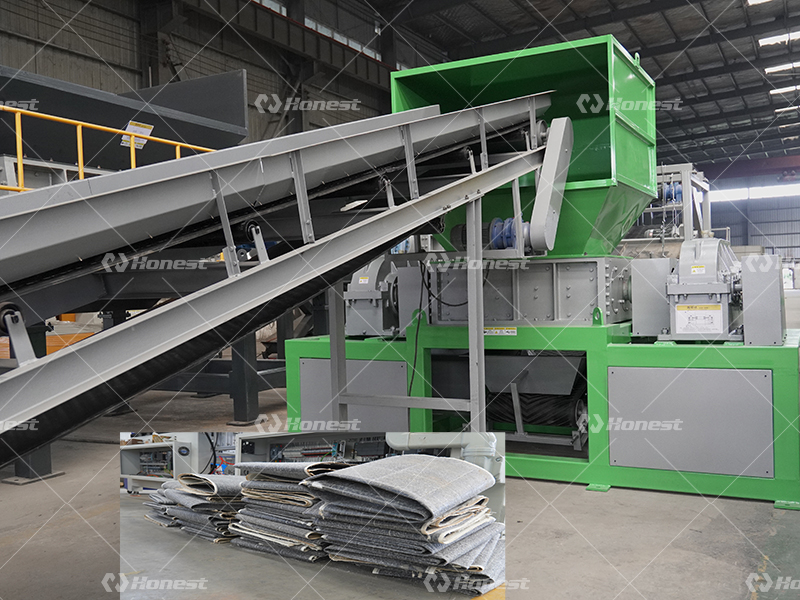
1. Future Outlook of Solar Panel Recycling
The recycling of solar panels is expected to become a major environmental and industrial trend. Key factors include:
-
Rapid global solar expansion: Millions of panels installed 15–25 years ago are now reaching end-of-life, leading to increasing waste volumes.
-
Environmental regulations: More countries are making solar panel recycling mandatory, creating long-term demand for advanced shredding and separation technologies.
-
High-value material recovery: Solar panels contain glass, aluminum, silicon, copper, and small amounts of precious metals, all of which create strong recycling opportunities.
-
Growth of green manufacturing: Recovered materials support sustainable production and reduce dependence on raw resource extraction.
These factors show that the market for solar panel shredding and recycling will grow steadily for decades.
2. Why Solar Panels Need to Be Shredded
Shredding is the first and most important step in solar panel recycling. The reasons include:
-
Material liberation: Solar panels are laminated structures made of glass, EVA film, silicon wafers, and metal wiring. Shredding breaks the bonding, making separation possible.
-
Improved efficiency: Smaller pieces allow downstream crushers, separators, and sorting machines to work more effectively.
-
Safety: Shredding reduces manual dismantling, minimizing risks from broken glass and embedded components.
-
High recovery rate: Proper shredding increases the purity and recyclability of glass, aluminum frames, copper wires, and silicon.
Without shredding, clean and efficient material separation would be extremely difficult.
3. How to Choose the Right Solar Panel Shredder
Selecting the correct solar panel shredder is essential for building a reliable recycling line. Key selection points include:
1.Machine capacity: Choose a throughput that matches your recycling target, ensuring stable and continuous operation.
2.Blade material and durability: High-strength alloy blades improve shredding efficiency and reduce maintenance frequency.
3.Machine structure: Double-shaft shredders are preferred for solar panels because they provide strong torque and can handle laminated materials.
4.Automation level: Automatic feeding, overload protection, and intelligent monitoring systems increase safety and efficiency.
5.Compatibility with downstream equipment: The shredder should produce uniform output suitable for crushers, separators, or thermal treatment systems.
6.Environmental compliance: Ensure the machine supports dust control and low-noise operation to meet regulatory standards.
A well-selected shredder boosts productivity and ensures long-term operational stability.
4. Solar Panel Shredding Process
A typical solar panel shredding process includes:
-
Step 1: Pre-dismantling – Remove aluminum frames, junction boxes, and attached cables.
-
Step 2: Primary shredding – Panels are fed into the shredder, where they are broken into smaller fragments.
-
Step 3: Secondary crushing (optional) – Pieces may be crushed further for finer separation.
-
Step 4: Sorting and separation – Glass, silicon, copper, and metals are separated using magnetic, eddy current, and electrostatic methods.
-
Step 5: Dust removal – Filters ensure a clean and safe working environment.
This process ensures efficient material recovery and smooth downstream processing.
5. Uses of Shredded Solar Panel Materials
Shredded solar panel materials have diverse industrial applications:
-
Recycled glass: Used in fiberglass production, construction materials, and packaging industries.
-
Aluminum: Reused in extrusion, casting, and manufacturing of new industrial components.
-
Copper wire: Applied in electrical equipment and cable manufacturing.
-
Silicon particles: Reprocessed for electronic products, solar-grade reuse, or industrial additives.
-
Plastic and EVA: Utilized as fuel substitutes or raw materials in chemical processes.
High recovery rates make solar panel shredding a valuable and sustainable business.