


Get the latest price? We'll respond as soon as possible(within 12 hours) Fields marked with an asterisk * are required.

Blog
Shredder for Used Tires
2025-12-02 12:18:27
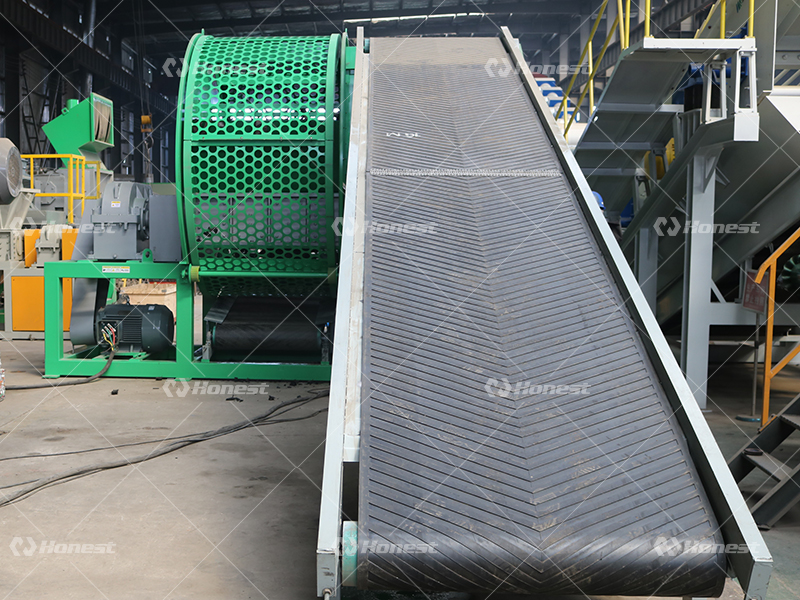
Shredder for used tires has become an essential machine for modern recycling plants as global waste tire volumes continue to rise. With millions of vehicles entering the market each year, the efficient processing of end-of-life tires is crucial for environmental protection and resource recovery. Understanding why used tires are increasing, how to choose the right shredder, how the shredding process works, and how shredded rubber is reused helps operators build a reliable and profitable recycling system.
1. Why Used Tires Are Increasing
The number of used tires is growing worldwide due to several key factors:
1.Rapid Growth in Vehicle Ownership
– More cars, trucks, buses, and motorcycles lead to more tire replacements.
2.Short Tire Lifespan
– Tires typically last only 3–5 years. Frequent wear and replacement generate large quantities of waste.
3.Expansion of Logistics and E-Commerce
– Delivery trucks and commercial fleets consume tires at a faster rate.
4.Limited Recycling Awareness in Some Regions
– Many used tires are still discarded improperly, creating environmental challenges.
5.Industrial and Agricultural Tire Use
– Heavy-duty machinery requires large tires that eventually become difficult-to-handle waste.
These trends make professional used tire shredders essential for waste management facilities and recycling businesses.
2. How to Choose the Right Shredder for Used Tires
Selecting a suitable shredder for used tires requires attention to several technical and operational factors:
◊Shredding Capacity (tons per hour)
– Select capacity based on processing volume: small plants may require 1–3 t/h; large plants may need 5–20 t/h.
◊Rotor and Knife Design
– High-strength alloy blades, optimized spacing, and low-speed, high-torque motors ensure stable shredding.
◊Compatibility With Tire Size
– Machines must support car tires, truck tires, and off-road (OTR) tires depending on business needs.
◊Automation Level
– Optional features include hydraulic pushers, automatic feeding, and intelligent monitoring systems.
◊Maintenance and Wear Resistance
– A good shredder should have easy-replaceable knives, strong bearings, and efficient cooling systems.
◊Overall Cost and Energy Consumption
– Evaluate operating costs, electricity usage, and long-term durability.
Choosing the correct shredder improves productivity, safety, and profitability in tire recycling operations.
3. How a Used Tire Shredder Works
The tire shredding process converts whole waste tires into small, consistent rubber pieces through the following steps:
♥Feeding
– Whole tires are loaded onto a conveyor or fed manually into the shredder’s hopper.
♥Primary Shredding
– Dual-shaft or single-shaft shredders tear the tires using slow-speed, high-torque cutters.
– Steel wire and rubber layers are separated gradually.
♥Secondary Shredding (Optional)
– Granulators or fine shredders reduce rubber chips to 10–30 mm depending on the final application.
♥Steel Wire Separation
– Magnetic separators remove embedded steel wire for recycling.
♥Fiber Removal
– Air separation systems extract nylon or polyester fibers.
♥Output Collection
– Clean rubber chips are collected and prepared for further processing.
This process ensures high output efficiency and stable particle size for downstream applications.
4. Uses for Shredded Used Tires
Shredded rubber from a used tire shredder has a wide range of profitable applications:
1.Rubber Powder Production
– Ground into fine powder for mats, shoe soles, sports flooring, and industrial rubber products.
2.TDF (Tire-Derived Fuel)
– Used as alternative fuel in cement kilns, power plants, and paper mills.
3.Construction Material
– Rubber chips serve as road base materials, asphalt modifiers, and shock-absorbing layers.
4.Playground and Sports Surfaces
– Clean rubber granules are used for running tracks, playground flooring, and artificial turf infill.
5.Metal and Fiber Recovery
– Extracted steel can be reused in steel manufacturing; fibers can be repurposed for insulation materials.
The shredder for used tires plays a vital role in transforming bulky waste tires into valuable resources. By understanding market trends, selecting the right shredder, mastering the shredding process, and exploring recycling applications, companies can build efficient, environmentally friendly, and economically profitable tire recycling operations.