


Get the latest price? We'll respond as soon as possible(within 12 hours) Fields marked with an asterisk * are required.

Blog
Scrap Metal Shredder for Sale
2025-11-12 12:14:59
In today’s recycling industry, scrap metal shredder have become essential equipment for processing and reusing waste metal resources. As global demand for metal continues to rise, effective recycling of scrap metals not only reduces environmental pollution but also saves energy and production costs. This article will introduce why scrap metal shredding is so important, the main types of scrap metals, how to choose the right shredder, its advantages and working process, and the uses of shredded materials.
1. Why Scrap Metal Shredding Is Important
Scrap metal shredding is a crucial step in metal recycling. Large metal pieces such as car shells, aluminum profiles, and steel drums cannot be directly remelted without prior processing. A scrap metal shredder breaks them into smaller, uniform pieces, increasing material density and improving smelting efficiency. It also helps remove impurities like paint, dust, or rubber from the metal surface. By doing so, shredding significantly reduces transportation costs and promotes sustainable resource use.
2. Types of Scrap Metals
Scrap metals are mainly divided into ferrous and non-ferrous metals.
-
Ferrous metals include iron, steel, and cast iron, which are widely used in construction and machinery manufacturing.
-
Non-ferrous metals include aluminum, copper, zinc, and stainless steel, commonly used in automotive, electronic, and packaging industries.
Each type of metal requires specific shredding equipment with different torque and blade designs to ensure efficient processing and material quality.
3. How to Choose the Right Scrap Metal Shredder
When selecting a scrap metal shredder for sale, consider the following factors:
1.Material type and hardness – Choose the shredder based on whether you are processing light aluminum or heavy steel.
2.Output capacity – Select the appropriate model depending on the expected production volume.
3.Blade quality – High-strength alloy blades ensure longer service life and stable performance.
4.Motor power and transmission system – A powerful drive system guarantees high torque output and smooth operation.
5.Maintenance and safety features – Look for designs with easy maintenance, overload protection, and automatic control systems.
4. Advantages and Working Process
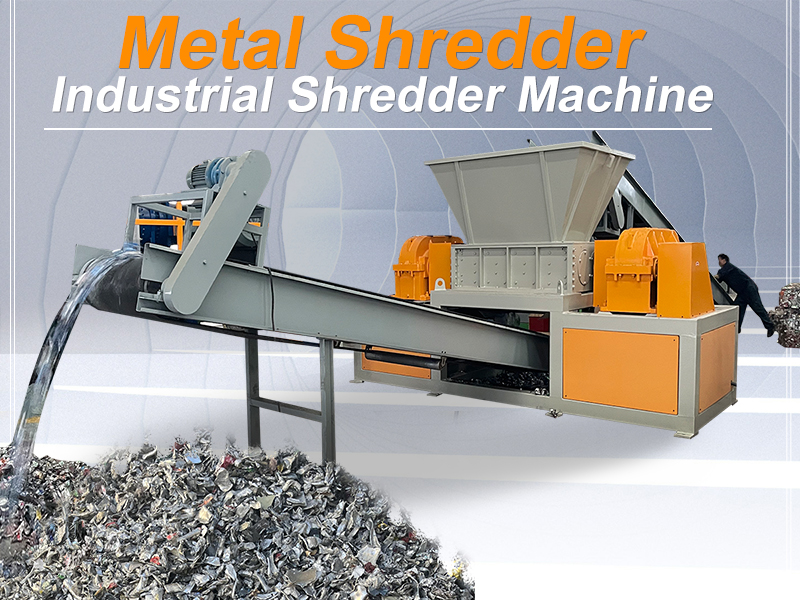
A modern scrap metal shredder features high efficiency, low noise, and durable structure. The working process generally includes feeding, shredding, and discharge. The materials are fed into the shredder through a conveyor, then crushed by rotating blades under strong torque. The shredded pieces are discharged through a screen, ensuring uniform size. This process improves recycling efficiency and reduces labor intensity.
5. Applications of Shredded Metal
After shredding, the processed metal fragments can be directly used for steelmaking, aluminum smelting, copper recovery, and metal powder production. These recycled materials are valuable resources for manufacturing new products in construction, automotive, and electronics industries.
In conclusion, investing in a scrap metal shredder is not only a profitable business decision but also an eco-friendly solution that supports circular economy development. Choosing the right shredder ensures maximum efficiency, high-quality output, and sustainable recycling results.