


Get the latest price? We'll respond as soon as possible(within 12 hours) Fields marked with an asterisk * are required.

Blog
Rubber Crusher Machine — Efficient Solution for Waste Rubber Recycling
2025-11-10 17:05:55
The rubber crusher machine plays a crucial role in the recycling and reuse of waste rubber materials. With the growing demand for sustainable waste management, rubber crushing technology has become widely used in tire recycling, rubber product processing, and material regeneration. This article will discuss the sources of waste rubber, reasons for shredding rubber, selection and recommendation of rubber crusher machines, and applications of crushed rubber, following strict SEO writing standards.
1. Sources of Waste Rubber
Waste rubber mainly comes from discarded industrial and household rubber products. Common sources include:
-
Used tires: These are the largest source of waste rubber, generated from cars, trucks, and motorcycles.
-
Rubber hoses and seals: Industrial machines and vehicles produce large amounts of worn-out rubber hoses, gaskets, and seals.
-
Footwear and sports equipment: Old shoes, soles, and rubber-based sports products also contribute to rubber waste.
-
Conveyor belts and rubber sheets: Factories and mining industries often replace old belts, generating tons of recyclable rubber every year.
These waste materials are difficult to decompose naturally and can cause serious environmental problems if not properly recycled. That is why rubber crusher machines are essential for efficient rubber processing.
2. Why Rubber Needs to Be Crushed
Rubber is highly elastic and durable, making it challenging to recycle in its original form. Crushing rubber into smaller pieces offers several advantages:
1.Size Reduction: Crushed rubber is easier to transport, store, and process in subsequent recycling stages.
2.Material Preparation: The shredded form allows for better mixing in new rubber production, asphalt modification, or insulation materials.
3.Energy Efficiency: Pre-crushing reduces the energy required for fine grinding or pyrolysis processes.
4.Pollution Reduction: Proper crushing and recycling prevent waste rubber from being landfilled or burned, reducing air and soil pollution.
Therefore, a rubber crusher machine is a key step in achieving efficient and eco-friendly rubber recycling.
3. Rubber Crusher Machine Selection and Recommendation
Choosing the right rubber crusher machine depends on the type and volume of material to be processed. The main types include:
-
Double-shaft rubber crusher: Ideal for heavy-duty materials like car tires and thick rubber sheets. It features two counter-rotating shafts for powerful and uniform shredding.
-
Single-shaft rubber crusher: Suitable for softer rubber waste, providing efficient cutting with low noise and energy consumption.
-
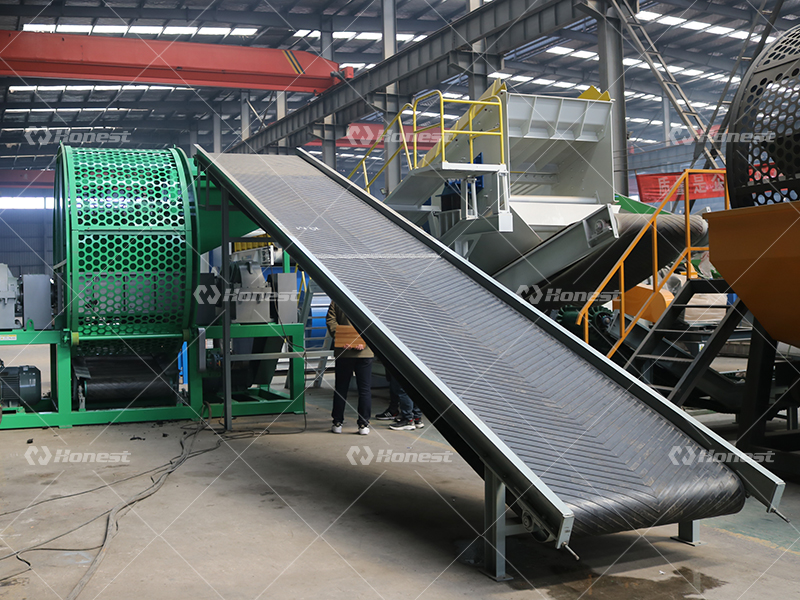
Automatic rubber crusher line: For large-scale production, this system integrates feeding, crushing, and separation functions, improving productivity and safety.
When selecting a machine, users should consider motor power, blade quality, output size, and maintenance cost. Reliable manufacturers like Suny Group and Honest Shredder provide durable machines with customizable designs to meet industrial recycling needs.
4. Applications of Crushed Rubber
Crushed rubber has broad applications in various industries.
-
Rubber powder production: Finely crushed rubber can be used in making recycled rubber sheets, mats, and floor tiles.
-
Asphalt modification: Rubber particles are added to asphalt mixtures to produce rubberized roads with improved durability and noise reduction.
-
Playground and sports surfaces: Crumb rubber is used in soft playground flooring, running tracks, and gym mats for shock absorption.
-
Industrial materials: It serves as raw material for insulation, shock-proof pads, and sealing components.
By turning waste into valuable materials, a rubber crusher machine helps achieve sustainable development and reduce resource waste.
In conclusion, the rubber crusher machine is an essential tool in the modern recycling industry. It transforms waste rubber from tires, belts, and other sources into reusable materials for industrial and civil applications. By choosing the right crushing equipment, companies can reduce costs, minimize pollution, and contribute to a greener future. Investing in a high-quality rubber crusher machine ensures long-term benefits in both environmental protection and economic efficiency.