


Get the latest price? We'll respond as soon as possible(within 12 hours) Fields marked with an asterisk * are required.

Blog
Plastic and Metal Shredder Machine
2026-02-03 16:27:00
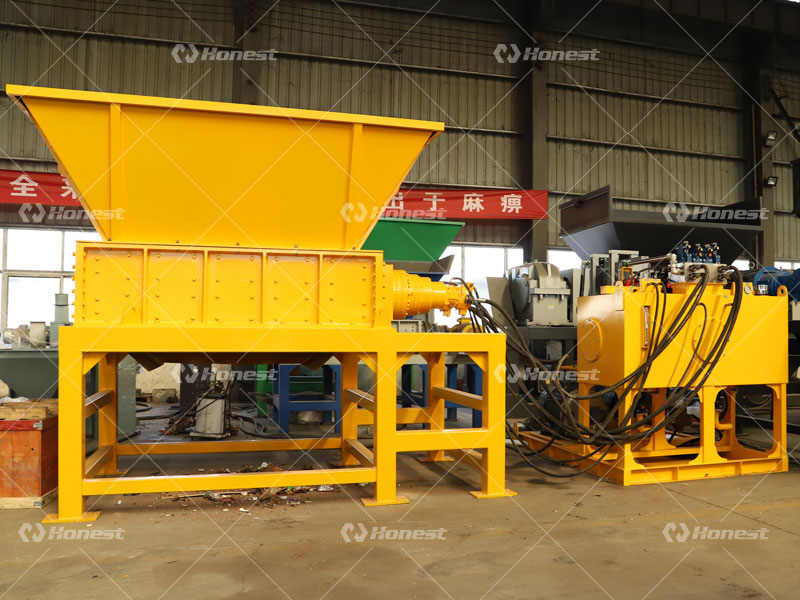
Plastic and metal shredder machine is an essential piece of industrial recycling equipment designed to reduce the size of waste materials for easier processing, transportation, and reuse. Many recycling plants and manufacturers ask an important question: can plastic and metal share one shredder machine? The answer is yes—with the right shredder design. This article explains how a plastic and metal shredder works, its structure, key features, shredding process, and the condition of shredded materials.
1. Can Plastic and Metal Use the Same Shredder Machine?
Plastic and metal can be shredded by the same machine when a multi-purpose or dual-shaft shredder is used. These shredders are engineered with high-strength components capable of handling materials with different hardness levels.
Common materials processed include:
-
Plastic pipes, bottles, films, lumps, and pallets
-
Aluminum profiles, scrap steel, metal drums, cables, and mixed waste
Plastic and metal shredder machine is widely used in solid waste recycling, WEEE recycling, automotive dismantling, and industrial scrap processing, especially when mixed materials must be handled efficiently.
2. Key Features of a Plastic and Metal Shredder Machine
A high-quality plastic and metal shredder has several outstanding features:
-
High-strength alloy blades
Made from hardened steel, capable of cutting both soft plastics and tough metals. -
Low-speed, high-torque design
Prevents overheating and reduces dust while ensuring stable shredding. -
Wide material adaptability
One machine can process plastics, light metals, and mixed materials. -
Stable operation and overload protection
Hydraulic or electronic protection systems prevent damage when encountering hard objects. -
Customizable output size
Shredded material size can be adjusted by blade thickness and screen configuration.
3. Structure and Main Components of the Shredder
A typical plastic and metal shredder machine consists of the following parts:
-
Feeding Hopper – Allows bulk or continuous material input
-
Shredding Chamber – Houses rotating shafts and cutting blades
-
Rotary Shafts – Single-shaft or dual-shaft systems for tearing and shearing
-
Blades and Spacers – Control cutting efficiency and output size
-
Drive System – Electric motor + gearbox for high torque
-
Discharge System – Outputs shredded materials for further processing
-
Control System – PLC or electrical control for safe operation
This robust structure ensures long service life and consistent performance.
4. Shredding Process Explained Step by Step
The shredding process of a plastic and metal shredder machine is as follows:
-
Materials are fed into the hopper manually or via conveyor
-
Rotating blades grip, tear, and shear materials
-
Plastics are cut and torn, while metals are broken by shear force
-
Materials are reduced to uniform pieces
-
Shredded output is discharged automatically
The low-speed operation minimizes noise, sparks, and excessive wear.
5. Condition of Shredded Materials After Processing
After shredding, materials show clear and uniform characteristics:
-
Plastics: irregular flakes or strips, suitable for washing, granulation, or extrusion
-
Metals: small scrap pieces, ideal for magnetic separation, melting, or refining
-
Mixed materials: easy to separate using magnetic or eddy current systems
Shredded materials have higher recycling value, lower transport costs, and improved downstream efficiency.
6. Applications and Recycling Value
Plastic and metal shredder machines are widely used in:
-
Plastic recycling plants
-
Scrap metal recycling facilities
-
Electronic waste recycling lines
-
Municipal solid waste processing
By using one shredder for multiple materials, companies can reduce equipment investment, save space, and improve recycling efficiency.
Plastic and metal shredder machine is a practical and cost-effective solution for processing mixed recyclable materials. With strong blades, robust structure, and flexible configuration, one shredder can efficiently handle both plastics and metals. Choosing the right shredder improves recycling efficiency, reduces waste volume, and maximizes material recovery value.