


Get the latest price? We'll respond as soon as possible(within 12 hours) Fields marked with an asterisk * are required.

Blog
Metal Shredder Machine
2025-12-11 15:42:14
1. Introduction to Metal Shredder Machines and Their Role in Recycling Industry
Metal shredder machine is essential equipment widely used in scrap metal recycling plants, waste processing centers, and steel mills. Its primary purpose is to reduce the size of bulky metal waste, making further sorting, separation, and smelting more efficient. As global metal consumption increases, metal scrap recycling has become a critical part of the circular economy. A high-performance metal shredder machine helps businesses manage complex metal waste streams, improve recycling efficiency, and reduce operating costs.
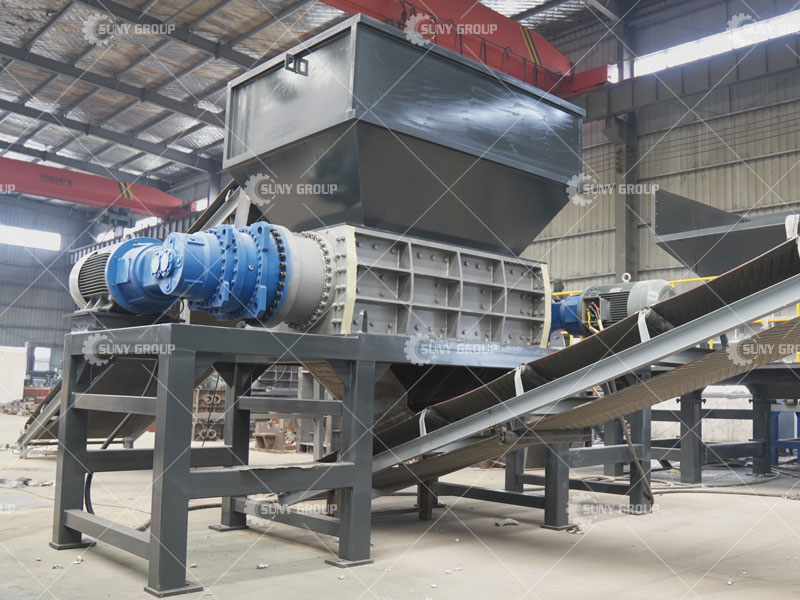
2. Main Components and Working Principle of a Metal Shredder Machine
A metal shredder machine consists of several key components, including a heavy-duty rotor, cutter blades, hydraulic system, feeding hopper, discharge conveyor, and intelligent control panel.
-
The rotor and cutters break down metal into smaller pieces.
-
The hydraulic system ensures stable torque during heavy loads.
-
The hopper allows continuous feeding of metal materials.
-
The control system enables safe operation and automatic monitoring.
The machine works by applying high torque and low speed to shred iron, aluminum, copper, steel, and mixed metal waste. This mechanical crushing process increases material density and makes downstream sorting much easier.
3. Types of Metal Shredder Machines and Their Industrial Applications
Metal shredder machines come in different types depending on processing requirements:
1.Single-Shaft Metal Shredders – Ideal for light metals, aluminum scrap, and thin sheets.
2.Double-Shaft Metal Shredders – Designed for higher torque and suitable for car shells, steel scraps, and large metal parts.
3.Four-Shaft Metal Shredders – Used for precise size control and complex waste materials.
4.Hammer Mill Shredders – Best for large-scale steel recycling, automotive scrap, and heavy-duty industrial operations.
These machines are widely used in recycling centers, metal processing plants, automobile dismantling, and waste management facilities.
4. Step-by-Step Metal Shredding and Material Separation Process
The metal shredding process includes several stages:
1.Feeding: Large metal scrap is loaded into the hopper.
2.Primary Shredding: Rotors and blades cut the metal into small fragments.
3.Magnetic Separation: Ferrous materials are separated using magnetic drums.
4.Eddy Current Separation: Non-ferrous metals like aluminum and copper are recovered.
5.Final Collection: Clean metal fractions are collected for smelting or resale.
This process maximizes material recovery and improves recycling output quality.
5. Environmental and Economic Benefits of Using Metal Shredder Machines
Using a metal shredder machine reduces landfill waste, lowers energy consumption, and supports resource conservation. Recycled metal requires significantly less energy compared to producing new metal from raw ore. Businesses also gain substantial economic benefits by reselling high-quality shredded metal, reducing transport costs, and increasing processing efficiency. In addition, metal shredders help reduce greenhouse gas emissions and promote sustainable industrial development.
6. How to Choose the Right Metal Shredder Machine for Your Recycling Plant
When selecting a metal shredder machine, consider processing capacity, input material type, blade durability, motor power, safety protection, and automation level. A high-quality shredder should offer stable performance, easy maintenance, and high shredding efficiency. Choosing the right equipment ensures long-term reliability and maximizes your recycling plant’s profitability.