


Get the latest price? We'll respond as soon as possible(within 12 hours) Fields marked with an asterisk * are required.

Blog
Metal Recycling Equipment Manufacturers
2025-11-20 17:16:13
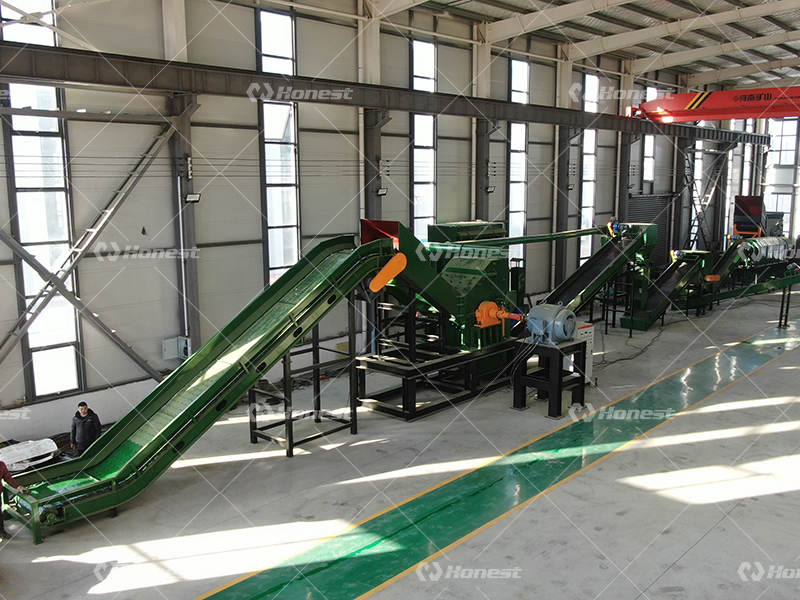
As global manufacturing and urbanization continue to expand, metal recycling equipment manufacturers play a critical role in supporting sustainable resource recovery. Metal waste from industries, households, and construction sites is increasing rapidly, making efficient recycling essential for environmental protection and economic development. This article explains the necessity of metal recycling, the equipment used in the recycling process, how to choose the right manufacturer, and the complete workflow with recommended equipment configurations.
1. Why Metal Recycling Is Necessary
Metal recycling is vital for several economic and environmental reasons:
-
Resource conservation: Metals such as copper, aluminum, and steel are finite. Recycling reduces dependency on mining.
-
Energy savings: Producing metals from recycled scrap requires significantly less energy compared to primary extraction.
-
Environmental protection: Recycling helps reduce landfill waste, minimize pollution, and lower greenhouse gas emissions.
-
Cost reduction: Recycled metals offer lower production costs, supporting industries like automotive, construction, and electronics.
-
Circular economy support: Metal recycling helps create a closed-loop system that maximizes resource utilization.
2. Main Types of Metal Recycling Equipment
Modern metal recycling relies on a range of machines designed to process various scrap materials efficiently. Common equipment includes:
-
Metal shredders: Used for car shells, aluminum profiles, steel plates, and mixed scrap.
-
Hammer mills: Suitable for light metals, aluminum cans, and thin steel sheets.
-
Metal crushers: Designed for scrapped appliances, car body frames, and heavy metal blocks.
-
Magnetic separators: Remove ferrous metals from mixed materials.
-
Eddy current separators: Separate non-ferrous metals such as aluminum and copper.
-
Shear balers: Used to cut oversized metal and compact it into dense bales.
-
Hydraulic scrap balers: Compress metals into uniform shapes for transport and smelting.
-
Sorting machines: Optical, air-separation, or density-based systems for precise classification.
-
Conveyor systems: Ensure stable feeding between processing stages.
Each machine contributes to improving recycling efficiency and output quality.
3. How to Choose Metal Recycling Equipment Manufacturers
Choosing reliable metal recycling equipment manufacturers ensures long-term performance and safe operation. Key selection factors include:
-
Production strength: Prefer manufacturers with advanced facilities, automated production lines, and proven engineering capability.
-
Experience and certifications: Look for companies with CE, ISO, or other international quality certifications.
-
Customization ability: The manufacturer should provide tailored solutions based on metal types and capacity requirements.
-
Equipment durability: High-strength steel, wear-resistant blades, and advanced hydraulic systems indicate higher reliability.
-
After-sales service: Ensure the supplier offers installation, training, maintenance support, and readily available spare parts.
-
Successful project cases: Evaluate previous recycling plant installations to confirm the manufacturer’s expertise.
4. Complete Metal Recycling Process and Equipment Configuration
A standard metal recycling line includes several coordinated steps. The process typically follows:
-
Feeding: Scrap metal is transported to the line using a conveyor or loader.
-
Primary size reduction: A shredder or crusher breaks metals into manageable pieces.
-
Screening: Crushed material passes through vibrating screens to achieve uniform size.
-
Magnetic separation: Ferrous metals are removed using magnetic separators.
-
Non-ferrous separation: Eddy current separators extract aluminum, copper, and other valuable metals.
-
Density or optical sorting: Enhances purity for high-grade recycled output.
-
Baling or briquetting: Final products are compressed for transport or smelting.
Equipment Configuration Example
-
Heavy-duty double-shaft shredder
-
Hammer mill or metal crusher
-
Magnetic separator + eddy current separator
-
Vibrating screen
-
Dust removal system
-
Hydraulic scrap baler
-
Conveyors throughout the line
This configuration ensures consistent output quality and efficient material flow.