


Get the latest price? We'll respond as soon as possible(within 12 hours) Fields marked with an asterisk * are required.

Blog
Industrial Soft Waste Processing Line
2026-03-17 19:02:40
Industrial Soft Waste Processing Line is designed to handle a wide range of flexible and lightweight materials. With increasing environmental concerns and stricter waste management regulations, businesses are turning to advanced processing lines to improve efficiency and sustainability.
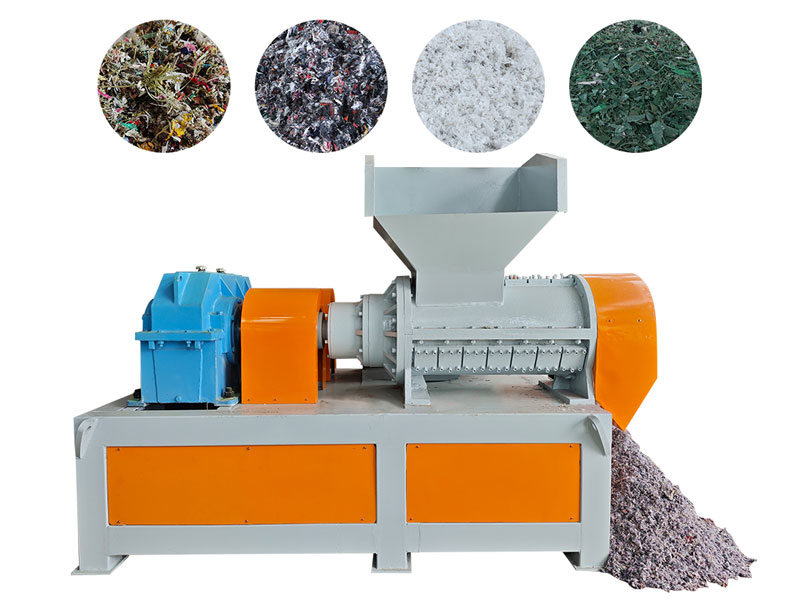
1. What Are Soft Waste Materials?
Soft waste refers to materials that are flexible, lightweight, and difficult to process using traditional crushing equipment. Common examples include:
-
Plastic films (PE, PP, PVC films)
-
Woven bags and jumbo bags
-
Textile waste and fabric scraps
-
Paper, cardboard, and packaging materials
-
Agricultural films and greenhouse covers
-
Foam materials (EPE, EVA)
These materials are widely generated in industries such as packaging, agriculture, and textiles.
2. Why Is Shredding Necessary?
Soft waste materials are often bulky and tangled, making them difficult to transport and recycle. Shredding plays a critical role in the recycling process:
-
Volume reduction: Decreases storage and transportation costs
-
Uniform size output: Improves downstream processing efficiency
-
Material separation: Facilitates sorting and recycling
-
Enhanced handling: Prevents clogging and equipment damage
Without proper shredding, soft waste can cause operational inefficiencies and increased costs.
3. Applications of Processed Soft Waste
After shredding and processing, soft waste materials can be reused in various industries:
-
Plastic recycling: Converted into pellets for new products
-
Refuse-derived fuel (RDF): Used as alternative fuel in cement plants
-
Textile recycling: Reprocessed into fibers or insulation materials
-
Paper recycling: Turned into pulp for new paper products
These applications highlight the economic and environmental value of proper waste processing.
4. Industrial Soft Waste Processing Line Overview
A typical industrial soft waste processing line includes several integrated systems:
-
Feeding system – Ensures continuous and stable material input
-
Primary shredder – Reduces large materials into manageable sizes
-
Secondary shredder or granulator – Further refines material size
-
Conveying system – Transfers materials between stages
-
Separation system – Removes contaminants such as metals
-
Dust collection system – Maintains a clean and safe environment
These components work together to deliver efficient and automated processing.
5. Features of Industrial-Grade Equipment
Industrial soft waste processing lines are designed for heavy-duty operations and offer:
-
High capacity and continuous operation
-
Robust structure for long-term durability
-
Advanced automation and control systems
-
Energy-efficient performance
-
Low maintenance requirements
These features make them suitable for large-scale recycling facilities.
Industrial Soft Waste Processing Line is essential for transforming low-value, difficult-to-handle waste into reusable resources. By integrating shredding, separation, and automation technologies, businesses can reduce costs, improve efficiency, and contribute to a more sustainable circular economy.