


Get the latest price? We'll respond as soon as possible(within 12 hours) Fields marked with an asterisk * are required.

Blog
Heavy Shredding Machine
2026-01-19 12:30:58
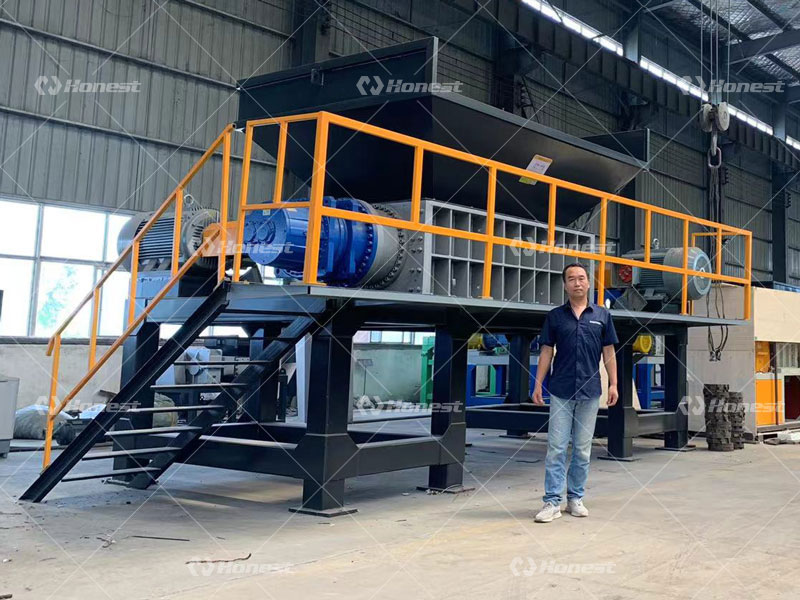
Heavy Shredding Machine is an essential piece of industrial equipment designed for processing large, tough, and bulky materials that cannot be handled by standard shredders. It is widely used in recycling, waste management, metal processing, and resource recovery industries. With high torque, reinforced structure, and durable cutting systems, a heavy shredding machine plays a key role in improving material handling efficiency and recycling value.
What Is a Heavy Shredding Machine?
Heavy shredding machine refers to a low-speed, high-torque industrial shredder specifically engineered to break down hard, thick, or oversized materials. Compared with light-duty or medium-duty shredders, heavy shredding machines feature:
-
Extra-thick frames and reinforced shafts
-
High-power drive systems
-
Wear-resistant alloy steel blades
-
Strong impact and shear resistance
These features allow the heavy shredding machine to operate continuously under harsh working conditions while maintaining stable performance.
Materials Suitable for a Heavy Shredding Machine
Heavy shredding machine is highly versatile and can process a wide range of materials, including:
1.Metal Materials
Scrap steel, aluminum profiles, car bodies, metal drums, and industrial metal waste.
2.Waste Tires and Rubber Products
Passenger car tires, truck tires, industrial rubber blocks, and conveyor belts.
3.Electronic and Electrical Waste
Large household appliances, e-waste shells, cable waste, and electronic housings.
4.Plastics and Composite Materials
Thick plastic lumps, plastic pallets, reinforced plastics, and aluminum-plastic composites.
5.Wood and Biomass Materials
Wooden pallets, tree roots, furniture waste, and construction wood debris.
Working Principle of a Heavy Shredding Machine
The working principle of a heavy shredding machine is based on slow-speed mechanical shearing and tearing. The process typically includes the following steps:
-
Materials are fed into the shredding chamber via a hopper or conveyor system.
-
One or two rotating shafts equipped with heavy-duty blades apply strong shearing, tearing, and squeezing forces.
-
The material is gradually torn into smaller pieces as it passes through the cutting zone.
-
A discharge system or screen controls the final output size before the material exits the machine.
This low-speed, high-torque operation reduces noise, dust, and excessive heat, ensuring safe and energy-efficient shredding.
Condition of Shredded Materials and Their Main Uses
After processing by a heavy shredding machine, materials are reduced into uniform or semi-uniform fragments. The shredded output has several advantages:
-
Reduced size and volume for easier transport and storage
-
Improved material liberation for downstream separation
-
Consistent feedstock for crushing, granulating, or sorting systems
The shredded materials are mainly used for:
- Secondary Crushing and Grinding
Shredded materials can be fed into crushers or granulators for further size reduction. -
Material Separation and Recovery
Metals, plastics, and other components can be efficiently separated using magnetic, eddy current, or air separation systems. -
Recycling and Remanufacturing
Recovered materials can be reused in metal smelting, plastic reprocessing, or composite manufacturing.
Industries That Use Heavy Shredding Machines
Heavy shredding machines are widely applied across multiple industries, including:
-
Metal Recycling Industry for scrap processing and volume reduction
-
Waste Management Industry for bulky waste and industrial waste treatment
-
Automotive Recycling Industry for end-of-life vehicles and tire recycling
-
Electronics Recycling Industry for large e-waste dismantling
-
Construction and Demolition Industry for wood and mixed waste processing
Heavy Shredding Machine is a powerful and reliable solution for processing large, hard, and complex materials. By delivering high torque, stable shredding, and consistent output, it significantly improves recycling efficiency and material recovery rates. With its wide material adaptability and strong industrial applicability, the heavy shredding machine has become indispensable equipment in modern recycling and waste processing industries.