


Get the latest price? We'll respond as soon as possible(within 12 hours) Fields marked with an asterisk * are required.

Blog
Glass Bottle Crusher Machine
2025-12-18 18:18:22
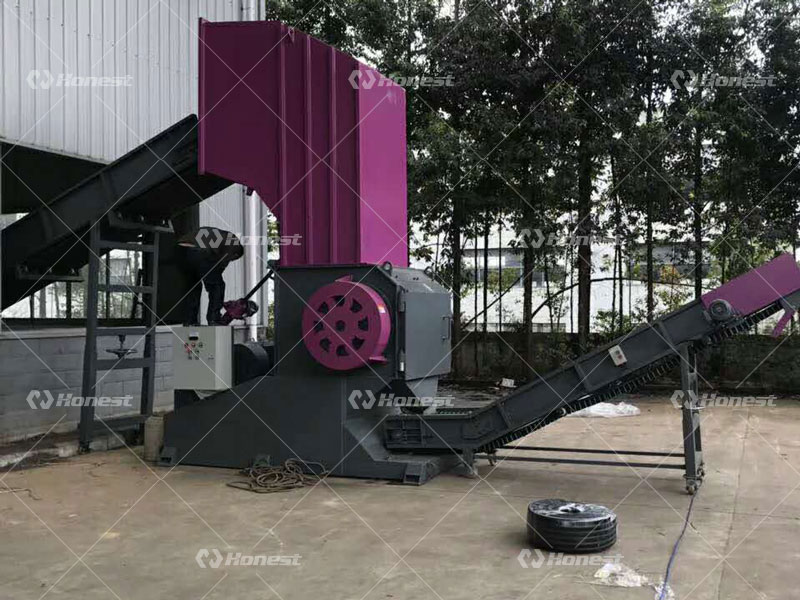
With global emphasis on environmental protection and circular economy, the glass bottle crusher machine has become an essential piece of equipment in glass recycling systems. Large quantities of waste glass bottles are produced every day, and efficient crushing is the foundation for high-quality recycling. This article provides a comprehensive explanation of glass bottle waste sources, reasons for crushing, selection criteria for crushers, the crushing workflow, and the main applications of crushed glass.
Main Sources of Waste Glass Bottles
Waste glass bottles mainly come from daily consumption and industrial packaging. Key sources include:
-
Beverage packaging such as beer, wine, liquor, and soft drinks
-
Food containers for sauces, condiments, honey, and preserves
-
Pharmaceutical bottles used for medicine and medical liquids
-
Cosmetic and chemical product containers
-
Catering industries including hotels, restaurants, and bars
-
Municipal waste sorting and recycling stations
These industries generate continuous and stable glass waste streams, creating strong demand for glass bottle crushing equipment.
Why Glass Bottles Must Be Crushed
Crushing glass bottles is a necessary step before recycling and reuse. The main reasons include:
1.Reducing transportation costs – Crushed glass significantly decreases volume, allowing more material per shipment.
2.Enhancing recycling efficiency – Uniform glass cullet improves melting speed and reduces energy consumption in furnaces.
3.Lowering environmental impact – Recycling crushed glass reduces landfill pressure and conserves natural resources.
4.Improving handling safety – Breaking bottles in a controlled system minimizes sharp fragments during manual handling.
5.Increasing material value – Properly sized cullet meets market standards for downstream applications.
Important Considerations When Selecting a Glass Bottle Crusher Machine
Choosing the right glass bottle crusher machine ensures stable operation and long-term profitability. The following factors should be carefully evaluated:
-
Processing capacity – Match machine output with daily recycling volume.
-
Crushing principle – Hammer-type crushers are suitable for high-output crushing, while roller crushers provide better particle uniformity.
-
Discharge size adjustment – Flexible settings help meet different application requirements.
-
Wear resistance – High-quality alloy steel components reduce maintenance frequency.
-
Dust control system – Enclosed structures and dust collectors protect operators and the environment.
-
Energy efficiency – Optimized motor power lowers electricity consumption.
-
Maintenance convenience – Easy access to wear parts reduces downtime.
Standard Glass Bottle Crushing Process
A complete glass bottle crushing line usually includes the following steps:
1.Feeding and pre-sorting – Bottles are fed into the crusher after removing impurities such as metal caps or plastic labels.
2.Primary crushing – Bottles are shattered into small pieces through impact or extrusion.
3.Screening and grading – Screens ensure consistent particle size distribution.
4.Dust collection – Fine glass powder is separated through a dust removal unit.
5.Finished product output – Qualified crushed glass is collected for packaging or storage.
This structured process ensures efficient crushing with minimal material loss.
Applications of Crushed Glass After Processing
Crushed glass has diverse reuse value across multiple industries, including:
-
Manufacturing of new glass bottles and containers
-
Production of construction materials such as concrete, bricks, and asphalt
-
Road base and pavement filler materials
-
Decorative glass for landscaping and architectural design
-
Abrasive materials for sandblasting and polishing
-
Foam glass and insulation material production
-
Water filtration and drainage systems
Conclusion
The glass bottle crusher machine is a key solution for transforming waste glass into reusable resources. By understanding glass bottle waste sources, the necessity of crushing, machine selection criteria, the crushing process, and downstream applications, recycling companies can maximize efficiency, reduce operational costs, and achieve sustainable development goals.