


Get the latest price? We'll respond as soon as possible(within 12 hours) Fields marked with an asterisk * are required.

Blog
Clothes Crushed Machine
2026-01-09 16:34:30
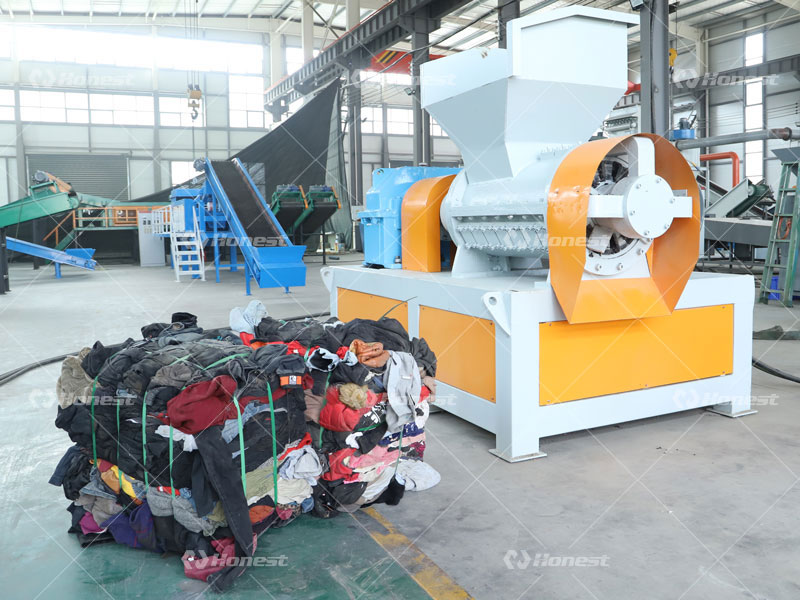
With the rapid growth of the textile and fashion industry, the amount of waste clothing generated worldwide is increasing every year. Efficient recycling has become essential for environmental protection and resource reuse. clothes crushed machine plays a key role in processing waste textiles by shredding old clothes into reusable raw materials. This article explains the sources of waste clothing, how to choose the right clothes crushed machine, how the machine works, and the applications of shredded materials.
1. Sources of Waste Clothes
Waste clothing comes from a wide range of channels, mainly including:
-
Household discarded clothing: Old, damaged, or out-of-fashion garments from consumers.
-
Garment manufacturing waste: Fabric scraps, defective products, and cutting leftovers from clothing factories.
-
Second-hand clothing sorting centers: Unwearable or low-grade clothes rejected during sorting.
-
Hotel and medical textiles: Used uniforms, bed sheets, curtains, and workwear.
-
Industrial and safety clothing: Protective garments that have reached the end of their service life.
These waste textiles usually include cotton, polyester, blended fabrics, denim, non-woven fabrics, and other soft materials, making them ideal for processing with a clothes crushed machine.
2. How to Choose the Right Clothes Crushed Machine
Selecting the proper machine is critical for efficient and stable operation. Key factors include:
-
Material type: Consider fabric softness, thickness, and fiber composition.
-
Processing capacity: Choose a machine based on daily or hourly output requirements.
-
Blade structure: Special anti-winding blades are essential for soft textiles.
-
Output size control: Adjustable screens or blade gaps allow different particle sizes.
-
Automation level: Decide between manual feeding or fully automated recycling lines.
-
Durability and maintenance: Heavy-duty structure and easy blade replacement reduce downtime.
A well-matched clothes crushed machine improves productivity while lowering energy consumption and maintenance costs.
3. How the Clothes Crushed Machine Works
The working process of a clothes crushed machine is simple but highly efficient:
1.Waste clothes are fed into the hopper manually or by conveyor.
2.A low-speed, high-torque rotor drives rotating blades to tear, cut, and shear the fabric.
3.Fixed counter-knives enhance cutting efficiency and prevent material entanglement.
4.Shredded materials pass through a screen to ensure uniform output size.
5.Qualified output is discharged for further processing, while oversized pieces are re-shredded.
This low-speed design reduces dust, noise, and fiber flying, making the process safe and environmentally friendly.
4. Applications of Shredded Clothing Materials
After crushing, textile materials can be reused in many industries:
-
Fiber regeneration: Used for recycled yarns, non-woven fabrics, and insulation materials.
-
Automotive and construction: Applied in soundproofing, thermal insulation, and padding.
-
Furniture and bedding: Used as filling for mattresses, sofas, and cushions.
-
Cleaning products: Converted into industrial wiping cloths and mops.
-
Energy recovery: Certain textiles can be used as alternative fuel or RDF materials.
These applications significantly increase the value of waste textiles and reduce landfill pressure.
5. Conclusion
A clothes crushed machine is an essential piece of equipment in modern textile recycling systems. By efficiently processing waste clothing from multiple sources, selecting the right machine, and maximizing the reuse of shredded materials, recycling companies can achieve both economic and environmental benefits. As sustainable development becomes a global priority, clothes crushed machines will continue to play a vital role in the circular textile economy.