


Get the latest price? We'll respond as soon as possible(within 12 hours) Fields marked with an asterisk * are required.

Blog
Bottle Crusher Machine
2025-11-20 16:54:15
bottle crusher machine plays a crucial role in modern waste management by reducing the size of plastic and glass bottles for easier recycling. As beverage consumption and packaging demands continue to increase worldwide, the need for efficient bottle crushing equipment has become more important than ever. This article explains the sources of bottles, major bottle categories, how to choose the right bottle crusher machine, the bottle crushing process, and the main uses of crushed materials.
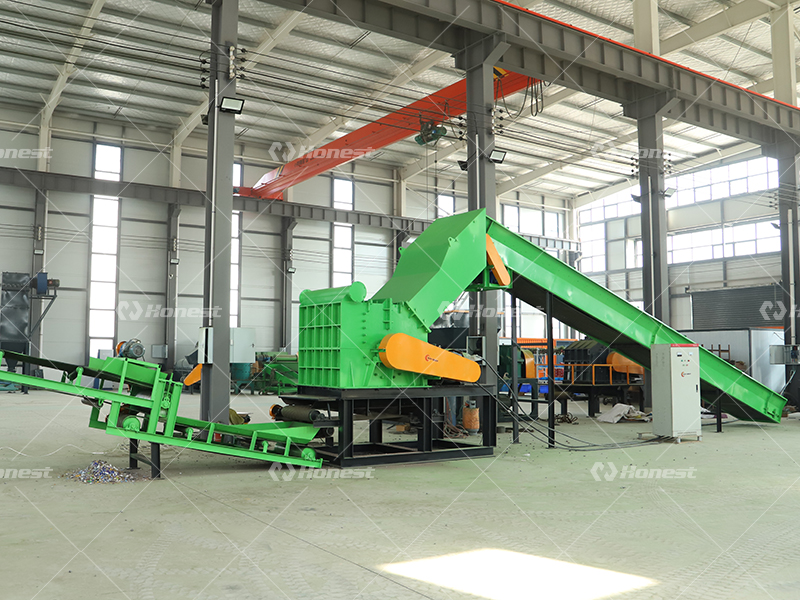
1. Sources of Bottles
Bottles come from a wide range of industries, and understanding their sources helps determine the proper crushing solution. Common sources include:
-
Beverage industry: water bottles, juice bottles, carbonated drink bottles, milk bottles.
-
Food packaging industry: oil bottles, sauce bottles, vinegar bottles.
-
Household waste: shampoo bottles, detergent bottles, cosmetic bottles.
-
Industrial packaging: chemical bottles, cleaning agent bottles, laboratory bottles.
-
Commercial waste: hotels, supermarkets, restaurants, bars, and recycling centers.
These sources generate millions of bottles daily, making efficient crushing and recycling essential.
2. Categories of Bottles
Bottles can be classified based on their material composition. The main categories include:
-
PET bottles: lightweight, transparent bottles used for beverages.
-
HDPE bottles: thick, durable bottles used for detergents and chemicals.
-
PP bottles: used for food containers and cosmetic packaging.
-
PVC bottles: less common but still used in some industrial products.
-
Glass bottles: widely used for alcohol, beverages, and condiments.
-
Multi-layer bottles: designed for specialized packaging requiring barrier protection.
Each category requires a specific blade configuration and crushing chamber design for optimal performance.
3. How to Choose a Bottle Crusher Machine
Selecting the right bottle crusher machine is crucial for efficiency, durability, and output quality. Key factors include:
-
Material Type: Choose machines designed specifically for PET, HDPE, PP, or glass bottles.
-
Capacity Requirements: Determine hourly output based on your recycling scale.
-
Blade Material and Design: High-strength alloy blades ensure long service life.
-
Feeding Method: Options include manual feeding, conveyor feeding, or automatic lifting systems.
-
Motor Power: Higher power supports fast, stable crushing for heavy-duty operations.
-
Safety and Protection Devices: Overload protection, emergency stop, and noise-reducing structures are essential.
-
After-sales Support: Ensure the supplier offers spare parts, maintenance, and technical guidance.
These factors help choose a machine that fits your recycling needs.
4. Bottle Crushing Process
The bottle crushing process is designed for efficiency and uniform particle size. The typical steps include:
-
Feeding: Bottles are placed into the hopper manually or via conveyor.
-
Pre-sorting: Labels, caps, and metal parts may be separated depending on material type.
-
Primary Crushing: The blades rotate at high speed to cut, shear, and compress the bottles.
-
Secondary Crushing: The material passes through a screen to achieve uniform size.
-
Discharging: Crushed flakes or glass particles exit through the discharge outlet.
-
Washing and Drying (optional): For plastic bottle recycling, flakes may undergo washing before further processing.
5. Applications of Crushed Bottle Materials
Crushed bottle materials have a wide range of industrial applications:
-
Recycled PET flakes: used in textile fibers, food-grade pellets, packaging straps, and plastic sheets.
-
Recycled HDPE flakes: used to produce pipes, containers, and injection-molded products.
-
Recycled PP flakes: used in automotive parts, household products, and storage boxes.
-
Crushed glass particles: used in glass remanufacturing, construction materials, insulation products, and decorative applications.